All Posts (3723)
Sort by
Morning by Morning, July 13 - "Put Out into the Deep Water"
Good morning, Lord Jesus. My Lord and Savior, be Lord of my life and every moment of my day. ...
"When He had finished speaking, He said to Simon, 'Put out into the deep water and let down your nets for a catch.' Simon answered, 'Master, we have worked all night long but have caught nothing. Yet if You say so, I will let down the nets.' When they had done this, they caught so many fish that their nets were beginning to break.... Then Jesus said to Simon, 'Do not be afraid; from now on you will be catching people.' When they had brought their boats to shore, they left everything and followed Him" (Luke 5:4-11).
It takes some effort to "put out into deep water." You don't get there by accident and it's never easy -- especially when you're tired or discouraged or disappointed. Even when you're tired and weary from the exhaustion of fruitfulness and success, it's hard to say, "Let's do it again! Let's go deeper still! Let's go further than last time and beyond our expectations!"
But to "put out into (the) deep water" of Your Spirit, is to seek to hear Your voice, to call You "Master," and obey the nudges of Your guidance in trusting faith, no matter the circumstances of how things appear at the moment. We need not be afraid. And we need not hold back, because there is always an abundance that follows obedience.
Part of living life in the "deep water" is being willing to not always see the abundance that follows obedience at the time. So often, we have to "walk by faith, not by sight" (2 Corinthians 5:7). If we insisted on only believing what we see and trusting only what we feel and always playing it safe to never take a risk on our sense of Your leading in the still, small voice we'd never get past the shallow water. And we'd never know the abundant treasures that wait for us in the deep water.
You've prepared a treasure of abundance for us in the "deep water" of Your Spirit. There's a great catch if we're just willing to be caught up in the arms of Your embrace to live in trusting faith. That's the place where "Eye has not seen nor ear heard, nor have entered into the heart of man the things which God has prepared for those who love Him ... God has reveled them to us through His Spirit ... yes, the deep things of God" (1 Corinthians 2:9-10). That's the place where we hear and respond to Your Word: "Call to Me and I will answer you, and will tell you great and hidden things that you have not known" (Jeremiah 33:3).
So when "Deep calls to deep," we can respond and put out to the deep water -- no matter how tired we are or how the circumstances appear -- or we can just settle for what we have and just stay where we are, content to live out our lives in the shallow water (Psalm 42:7). It's safer for sure. We have a lot more control when the water is only up to our ankles instead of over our heads (Ezekiel 47:3-5). But my, what great treasures we would miss. In Jesus' name I pray. Amen.
Be encouraged today! In the Love of Jesus, Tommy Hays
My friend, I pray you take time to position your spirit to hear the Master call and sense the nudging of His Holy Spirit to put out into the deep waters of all the He has for you and desires to do through you, in Jesus' name! Please pray the same for me. God bless you, my friend!

Tommy Hays | Messiah Ministries
Healing from the Inside Out
Pastoral Director | Rapha God Ministries
4 Dominion Drive, Building 1
San Antonio, Texas 78257
Please share this word to encourage a friend!
Morning by Morning, July 12 - "Abundantly Prosperous"
Good morning, Lord Jesus. Thank You for the gift of prayer, here in the communion of Your Presence -- Father, Son, and Holy Spirit of God. ...
"When all these things have happened to you, the blessings and the curses that I have set before you, if you call them to mind among the nations where the Lord your God has driven you, and return to the Lord your God, and you and your children obey Him with all your heart and with all your soul, just as I am commanding you today, then the Lord your God will restore your fortunes and have compassion on you, gathering you again from all the peoples among whom the Lord your God has scattered you. Even if you are exiled to the ends of the world, from there the Lord your God will gather you, and from there He will bring you back. The Lord your God will bring you into the land that your ancestors possessed, and you will possess it; He will make you more prosperous and numerous than your ancestors.
Moreover, the Lord your God will circumcise your heart and the heart of your descendants, so that you will love the Lord your God with all your heart and with all your soul, in order that you may live. The Lord your God will put all these curses on your enemies and on the adversaries who took advantage of you. Then you shall again obey the Lord, observing all His commandments that I am commanding you today, and the Lord your God will make you abundantly prosperous in all your undertakings, in the fruit of your body, in the fruit of your livestock, and in the fruit of your soil. For the Lord will again take delight in prospering you, just as He delighted in prospering your ancestors, when you obey the Lord your God by observing His commandments and decrees that are written in this Book of the Law, because you turn to the Lord your God with all your heart and with all your soul.
Surely, this commandment that I am commanding you today is not too hard for you, nor is it too far away.... No, the word is very near to you; it is in your mouth and in your heart for you to observe" (Deuteronomy 30:1-14).
You take delight in making me "abundantly prosperous in all (my) undertakings" (v. 9). You take delight in my obedience to Your will and Your ways (v. 10). And You take delight when I come to realize I cannot even obey You apart from You, that I need Your word in my mouth and in my heart every moment of every day (v. 14).
Lord Jesus, You are the Word of God who lives in my heart (John 1:14). You are the One, along with my Father, who's given me Your Spirit to give me the desire and the power to obey Your will and walk in Your ways (Philippians 2:13). And You are the One who reminds me that the measure of my love for You is revealed in my obedience to You: "If you love Me, you will keep My commandments. And I will ask the Father, and He will give you another Helper, to be with you forever.... On that day you will know that I am in My Father, and you in Me, and I in you. They who have My commandments and keep them are those who love Me; and those who love Me will be loved by My Father, and I will love them and reveal Myself to them.... Those who love Me will keep My word, and My Father will love them, and We will come to them and make Our home with them. Whoever does not love Me does not keep My words; and the word that you hear is not Mine, but is from the Father who sent Me.... The Helper, the Holy Spirit, whom the Father will send in My name, will teach you everything, and remind you of all that I have said to you.... If you keep My commandments, you will abide in My love, just as I have kept My Father's commandments and abide in His love. I have said these things to you so that My joy may be in you, and that your joy may be complete" (John 14:15-15:11).
So there is a Biblical relationship between love, obedience, and prosperity. And it's all related to my personal relationship with You and complete dependence upon You and Your Spirit abiding within me. This is how You've expressed Your heart and Your plans for me in Your Word: "'For I know the plans I have for you,' declares the Lord, 'plans to prosper you and not to harm you, plans to give you hope and a future'" (Jeremiah 29:11 NIV).
Obedience is not just an Old Testament thing; it's a Jesus thing. Just like prosperity is not just a Jesse Duplantis thing; it's a Bible thing. And You've said these things through Your Word living in our hearts so that "(our) joy may be complete" as You delight in both our obedience and our prosperity. There's no "prosperity gospel" apart from the "obedience gospel."
Come, Holy Spirit, sent from My Father in the name of Jesus. Anoint me afresh with the desire and the power to love and obey, to keep turning to God and returning to God. No matter how far I ever get away, You're always calling me home to the place of being "abundantly prosperous" in my relationship with You. "How joyful are those who fear the Lord -- all who follow His ways! You will enjoy the fruit of your labor. How joyful and prosperous you will be! ... This is the Lord's blessing for those who fear Him!" (Palm 128:1-4 NLT) In Jesus' name I pray. Amen.
Be encouraged today! In the Love of Jesus, Tommy Hays
My friend, I pray you are "abundantly prosperous" in your deeply personal relationship of obedience and love with the Lord our God, in Jesus' name! Please pray the same for me. God bless you, my friend!

Tommy Hays | Messiah Ministries
Healing from the Inside Out
Pastoral Director | Rapha God Ministries
4 Dominion Drive, Building 1
San Antonio, Texas 78257
Please share this word to encourage a friend!
Morning by Morning, July 11 - "Share His Divine Nature"
Good morning, Lord Jesus. Be at the center of all I am and all I do this day. ...
"By His divine power, God has given us everything we need for living a godly life. We have received all of this by coming to know Him, the One who called us to Himself by means of His marvelous glory and excellence. And because of His glory and excellence, He has given us great and precious promises. These are the promises that enable you to share His divine nature and escape the world's corruption caused by human desires" (2 Peter 1:3-4 NLT).
Lord, how can I -- being human and filled with the human desires of my world -- come to "share (Your) divine nature"? How can I "have the mind of Christ" and "let the same mind be in (me) that was in Christ Jesus? (1 Corinthians 2:16; Philippians 2:5) How can I "be perfect, therefore, as (my) heavenly Father is perfect"? (Matthew 5:48) How can I "be holy" just "as He who has called (me) is holy" (1 Peter 1:15)? How can I be one of those who are created and called to "be blameless and innocent, children of God without blemish in the midst of a crooked and perverse generation, in which (we) shine like stars in the world ... holding fast to the world of life" (Philippians 2:14-16). ...
As I wait and listen, it seems I hear You saying: "My son, apart from Me, you can do nothing. Apart from Me, you cannot stop sinning and become a saint or start doing everything right and stop doing anything wrong. It is not about what I have called you to do or not do; it is about who I have called you to become. I have called you to become like Me."
Yes, Lord. But how would I become like You? ...
I believe I hear You speaking in my heart: "You become like Me as you yield to Me. Willing choose, by the power of My grace, to let Me conform you to My nature. Allow My Spirit to fill you and change you, to lead you and guide you, to put My thoughts in your mind and My desires in your heart, to make you more like Me each day. You cannot do this; but you can choose to allow Me to do this in you if you willingly choose to be desperately dependent upon Me alone through humility and faith." ...
Yes, Lord. I believe You. And I believe Your "great and precious promises" for me and for all who believe and come to know You. "For God knew His people in advance, and He chose them to become like His Son, so that His Son would be the firstborn among many brothers and sisters. And having chosen them, He called them to come to Him. And having called them, He gave them right standing with Himself. And having given them right standing, He gave them His glory" (Romans 8:29-30 NLT). "As we live in God, our love grows more perfect. So we will not be afraid on the day of judgment, be we can face Him with confidence because we live like Jesus here in this world" (1 John 4:17 NLT). "As He is, so are we in this world" (1 John 4:17 NRSV).
So by the power of Your grace at work within me, in humility and faith, I willingly choose to be desperately dependent upon You alone.
Come, Holy Spirit of God. Make me perfect as my heavenly Father is perfect; make me holy as You are holy; make me to share Your "divine nature" as You give me both the desire and the power to keep desiring Your nature every day. "For it is God working in (me), giving (me) the desire and the power to do what pleases Him" (Philippians 2:13 NLT). And I believe this is what pleases You -- that I would be willing to become more like You each day. "God's will is for (me) to be holy" (1 Thessalonians 4:3 NLT). It's only possible by the grace of Your love, the power of Your blood, and the work of Your Spirit (1 John 1:7). Lord, let it be so. In Jesus' name I pray. Amen.
Be encouraged today! In the Love of Jesus, Tommy Hays
My friend, I pray God's Holy Spirit gives you the desire and the power to become more like Jesus every day, that you may share in His divine nature and shine like a star in your world, in Jesus' name! Please pray the same for me. God bless you, my friend!

Tommy Hays | Messiah Ministries
Healing from the Inside Out
Pastoral Director | Rapha God Ministries
4 Dominion Drive, Building 1
San Antonio, Texas 78257
Please share this word to encourage a friend!
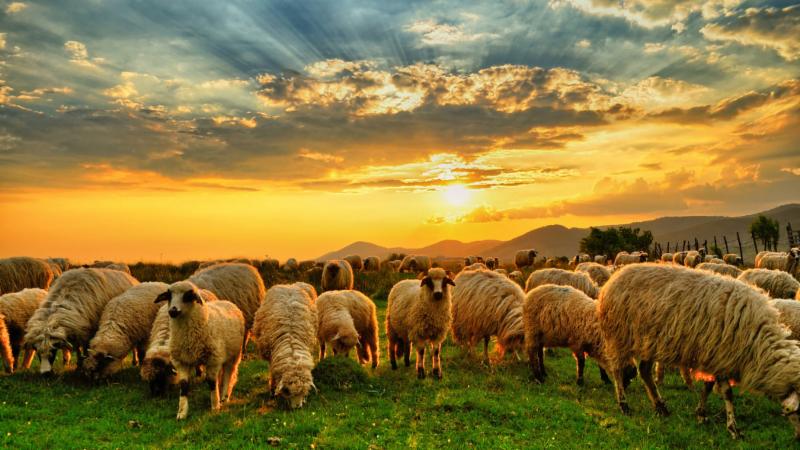
Morning by Morning, July 10 - A Sheep and a Son
Good morning, Lord Jesus. I speak out Your name and listen for Your voice. ...
"The one who enters by the gate is the shepherd of the sheep. The gatekeeper opens the gate for him, and the sheep hear his voice. He calls his own sheep by name and leads them out. When he has brought out all his own, he goes ahead of them, and the sheep follow him because they know his voice.... Very truly, I tell you, I am the good shepherd" (John 10:2-11).
As I look to You in worship and listen for You in prayer, Your Holy Spirit opens the gate of my spirit to welcome You into every moment of my day. You call me by name; You know my nature and my needs; and You speak into my spirit what You want me to hear and to know.
I'm a sheep and I'm a son -- a sheep of Your fold and a son of my Father. Help me listen and hear, so I can rise and follow You into Your will for my day -- Father, Son, and Holy Spirit of God. ...
As I look and listen to begin this day, it seems I hear You saying: "My son, you always have the freedom to open the gate of your heart to Me or not, to watch and wait and worship or not, to take time to listen and trust and obey or not. Choose well. Seek Me first and My righteousness and My kingdom. Then all you need will be added unto you; and all I desire for you will be fulfilled through you."
Yes, Lord. As best as I can and all by Your grace, I choose to seek You first (Matthew 6:33). As a sheep of my Good Shepherd, I seek to hear Your voice and open my heart (Hebrews 3:7). As a son of God, I seek to be led by Your Spirit. "For all who are led by the Spirit of God are sons of God.... For (we) have received the spirit of sonship (Romans 8:14 RSV).
O Lord, my God, put Your thoughts in my mind and Your desires in my heart. Guide my steps by the leading of Your Spirit into the path of life You have for me today (Psalm 23:3). In Jesus' name I pray. Amen.
Be encouraged today! In the Love of Jesus, Tommy Hays
My friend, I pray you choose well to seek God first, that you may hear His voice and be led by His Spirit in the path of life He has chosen for you this day, in Jesus' name! Please pray the same for me. God bless you, my friend!
Friends, I'm glad to have you with me on my daily journey of prayer. These are my journaled prayers I write each morning as I seek to start my day embraced by the Father, centered in Christ, and filled afresh with the Holy Spirit. God bless you and thank you for joining with me on the journey. And thank you so much for praying these prayers back for me, as I pray them for you!
Tommy Hays | Messiah Ministries
Healing from the Inside Out
Pastoral Director | Rapha God Ministries
4 Dominion Drive, Building 1
San Antonio, Texas 78257
Please share this word to encourage a friend!
Morning by Morning, July 9 - "Led by the Spirit" Through Every Temptation
"Then Jesus was led by the Spirit into the wilderness to be tempted by the devil.... Then the devil took Him to the holy city.... Again, the devil took Him to a very high mountain.... Jesus said to him, 'Away with you, Satan! For it is written, 'Worship the Lord your God, and serve only Him.'' Then the devil left Him, and suddenly angels came and waited on Him" (Matthew 4:1-11).
Lord, help me learn to discern when I'm in a place where the Spirit has led me or where the devil has taken me. Even You, holy and without sin, were both led by the Spirit to places at times and taken by the devil to places at times, according to the Word of God. You were "in all points tempted as we are, yet without sin" (Hebrews 4:15 NKJV). You always knew how to respond. You always embraced all the Spirit had for You and always rejected all the devil had for You. By the power of Your grace, may I learn to do the same.
Thank You for the promise of Your Word, "All who are led by the Spirit of God are children of God" (Romans 8:14). And for Your promise, "When the Spirit of Truth comes, He will guide (me) into all the truth" (John 16:13). I am Your child and You are my Father. Come lead me by Your Spirit into Your truth. Empower me to discern and resist every temptation of the devil. "No temptation has overtaken (me) except such as is common to man; but God is faithful, who will not allow (me) to be tempted beyond what (I) am able, but with the temptation will also make the way of escape, that (I) may be able to bear it" (1 Corinthians 10:13 NKJV).
Let Your Word be hidden in my heart so that I can declare what is written; and let Your Spirit guide my spirit so that I'm certain where I am and who led me there or took me there. Then -- no matter whether it was You or the devil -- You'll cause it all to work together for good in the fulfillment of Your plans and purposes (Romans 8:28). In Jesus' name I pray. Amen.
Be encouraged today! In the Love of Jesus, Tommy Hays
Be encouraged today! In the Love of Jesus, Tommy Hays
My friend, I pray you are led by the Spirit through every temptation with God's Word hidden in your heart and God's Spirit guiding your spirit, in Jesus' name! Please pray the same for me. God bless you, my friend!

Friends, I've been away on a couple of family trips but am glad to be back with you on our journey of prayer together! God bless you and thank you for joining with me on the journey!
Tommy Hays | Messiah Ministries
Healing from the Inside Out
Pastoral Director | Rapha God Ministries
4 Dominion Drive, Building 1
San Antonio, Texas 78257
Please share this word to encourage a friend!
His grace comes to me in my darkest hours to sooth my hurting heart and pour out His love on my wounded soul. I cry out to the one and only true living God who loves and cherishes me more than I will ever comprehend. He is my friend in my dark hours. He is my comfort and covers me with His grace like a blanket of warmth covering my discouragement and surrounding me with His everlasting love that heals me to my deepest core. He has only love for me.
His grace is here for me and is never ending. It moves over me like a cloud and covers me with everlasting love. He brings contentment to my soul and pushes out the poison of worry and doubt. His desire is that all of us turn to Him for healing.
I feel the world trying to push me down, but I turn to God and saves me from the schemes the cold cruel world. I cry out to His Son for salvation and He rescues me. He never turns His back on me. He is my constant, trustworthy savior. Many people come and go, never staying in one place to long.
They run with the wind any which way it goes. They choose a new path because it looks easy or pretty. They run off course because they follow the wrong master of the “pretty” path or the “easy” path. They are lost and they create many burdens for themselves because they wanted the easy way. God is waiting for their return to His way because His burden is light. He carries us to joy and contentment in ways that no one or no other thing can. When we finally see His light, we can rest. We worship Him because He is. And when we worship Him just because He is, we receive rewards unmatched by any other thing in the entire earth.
We will never know the depths that His love can go, because it is never ending. Come to Him O children of this world! Know His love! Know His salvation from our sins! Seek only His love! It is the only way to be saved from the condemnation of the world. It is the only way to find true peace and to understand true love in its purest form.
As I write these words that have been laid on my heart from the Holy One, my heart begins to sing of the great mercy He bestows on me! I would be nothing without the Love of the One True God, the Father of the Lord Jesus Christ who died for us and for our sins! We could not receive this everlasting comfort without first accepting Jesus as our savior and acknowledging the majesty of the Holy God creator of the universe! Come to God! Praise His Name in the heavens and know that He is the Way, the Truth and the Life! He forgives our sins, our mistakes, our lies and our hatred. He shows us the way to true love and forgiveness for others and removes hate from our ugly souls. He is the only way to true peace.
Great peace to those who read these words, accepts Jesus as their savior and looks to God for all of the answers.
In His love,
Pam
Psalm 85:11-12: For the Lord God is a sun and shield; The Lord will give grace and glory; No good thing will He withhold from those who walk uprightly. O the Lord of hosts, Blessed is the who trusts in You!
Psalm 45:2a: Grace is poured out upon your lips; therefore God has blessed you forever.
In the Arab Gulf, fruitful conversations are continuing to take place. A Christian professor was surprised to see Alex (pseudonym)'s Instagram post from in stylish script, with a tiny reference to Matt. 19. The professor wrote to ask, "Do you know the source of your quote?"
Alex answered, "Umm. No." This exchange later led to a private explanation of the gospel, and Alex was delighted to take an Arabic New Testament home. Pray for his salvation and growth.
Pray the prayer of Samuel Zwemer over Gulf Arabs:
Samuel Zwemer (1867-1952), "The Apostle to Islam", wrote this prayer in 1923. It is still very relevant today. Pray this prayer with us for Muslims all over the world, especially for the local Arabs in the AP and those on summer holidays in Europe right now.
Almighty God, our Heavenly Father, who hast made of one blood all nations and hast promised that many shall come from the East and sit down with Abraham in thy kingdom: We pray for thy prodigal children in Muslim lands who are still afar off, that they may be brought nigh by the blood of Christ. Look upon them in pity, because they are ignorant of thy truth. Take away pride of intellect and blindness of heart, and reveal to them the surpassing beauty and power of thy Son Jesus Christ. Convince them of their sin in rejecting the atonement of the only Savior. Give moral courage to those who love thee, that they may boldly confess thy name. Hasten the day of religious freedom in Turkey, Arabia, Iran, Iraq, Afghanistan, and North Africa. Send forth reapers where the harvest is ripe, and faithful plowmen to break furrows in lands still neglected. May the tribes of Africa and Malaysia not fall prey to Islam but be won for Christ. Bless the ministry of healing in every hospital, and the ministry of love at every church.... Strengthen converts, restore backsliders, and give all those who labor among Muslims the tenderness of Christ, so that bruised reeds may become pillars of his church, and smoking flaxwicks burning and shining lights. Make bare thine arm, O God, and show thy power. All our expectation is from thee.
Father, the hour has come; glorify thy Son in the Muslim world, and fulfill through him the prayer of Abraham thy friend, "O, that Ishmael might live before thee." For Jesus' sake. Amen.
What a joy it is to have that precious little grandchild come running into your arms with hugs and kisses. The six-year-old calling to tell you she lost her first tooth or your seven-year-old grandson excited about making his first goal in his soccer game.
In addition to the senior discounts, grandchildren are one of the rewards of growing older. Mary H. Waldrip says it well, “Grandchildren are God’s way of compensating us for growing old.”
I grew up in a Midwest rural community many years ago. I didn’t encounter the temptations and pressures my grandchildren are facing today in this media-driven culture. Our society is teetering on the brink of moral and spiritual bankruptcy. I pray for protection from the evil deception in the world around them.
I have nine grandchildren, ages ranging from fifteen years to thirty-six years and four great-grandchildren under 5 years of age. As a long-distance grandmother for many years, I was not fully aware of my grandchildren’s immediate needs. I prayed that God would bless them, give them good health and protection. Ultimately, I became frustrated and felt something was lacking with my vague and general prayers. I asked God to show me how to become more deliberate in praying for them.
After reading Grandma, I Need Your Prayers by Quin Sherrer and Ruthanne Garlock, and When Mothers Pray by Cheri Fuller, prayers for my grandchildren changed dramatically. The books were full of practical advice, encouraging me to use specific scriptures in praying. Motivating me to pray regularly and accurately for their emotional, physical, and spiritual well being.
I want to share some of the practical advice I pursued.
- I developed a Photo Prayer Journal in a three-ring binder with a section for each grandchild. Each section had a profile sheet with the grandchild’s picture and information about their school, church, friends, and activities. Followed with several blank pages on which I recorded my prayer concerns, hopes, and dreams for the grandchild.
- God’s Word became a manual for learning how to pray more effectively for my grandchildren. Praying scripture unleashes the supernatural power of God in their lives. When I pray according to God’s Word, I am in line with His will. As I started claiming God’s promises and personalizing the scriptures for them, I experienced more confidence and boldness in my prayer life.
- New channels of communication opened with my older grandchildren when I asked how I could pray for them. For the younger children, I consulted with their parents to keep abreast of specific concerns. Then I was able to pray more specifically for them.
- A primary prayer for all my grandchildren is that they will come to realize how much God loves them. God will always be there for them. They will accept Jesus Christ as their personal Savior and spend eternity with Him.
- Paul tells me in Romans 8:26 "when I don’t know what to pray for; the Holy Spirit intercedes for me. The Holy Spirit knows the needs of my grandchildren, so I ask him to intercede according to His will." It is comforting to me that I can put my concerns in God’s hand, leaving them with Him. It shifts the responsibility on God, instead of carrying the burden myself.
- The love I have for my grandchildren would like to control their lives and keep them from pain, disappointment, or discouragement. Humanly, I want to rescue them and pray, “Don’t let anything bad happen to them.” To which the Lord may say, “I need to allow disappointment, pain, and failure so they will learn to trust and obey me so I can pour my blessings on them.” It’s crucial I pray for God’s will in their lives.
- God has created my grandchildren for a unique purpose. I pray they will discover their dreams, be motivated to pursue them, and trust He will provide the resources.
- It is essential for me to communicate with my grandchildren that I love them and accept them even though I may not accept their behavior. I like to call them on the phone; send cards for holidays, note cards, or e-cards to offer encouragement, and let them know I love them and pray for them.
Blessings as a result
I want to share part of a letter from my married granddaughter. It is a confirmation that praying for these precious grandchildren is never a wasted effort. She wrote, “My grandmother’s phone calls, cards, and emails were encouraging and made a significant impact on my life throughout my teenage and college years. Her prayers and encouragement have been rock-solid reminders of God’s truth. Amidst my crazy and incredibly life-shaping year, her prayers helped me surrender the craziness of my life to God.”
My prayers for my grandchildren have strengthened my relationships with them. The Photo Prayer Album has been an excellent tool for me to stay connected to them. Whether they live nearby or far away, praying for them intentionally keeps me in touch. Often my prayers can be more potent than my presence when I let them know I am praying for them.
Best of all, praying God’s Word has enabled me to pray with His power, direction, and wisdom. As their grandparent, I can have a significant role in stabilizing and influencing their lives by praying for them during these turbulent years. It has given me fulfillment and satisfaction in praying for them.
The seeds of prayer we plant today will yield a harvest of blessing in the future. My prayer is that you have been challenged to pray strategically and deliberately for your grandchildren. In Isaiah 44:3 God told the Israelites, “I will pour out my Spirit on your offspring and my blessing on your descendants”.God still promises to pour out his Spirit and blessings on our descendants. Don’t we want that for our grandchildren and future descendants?
The greatest long-lasting gift we can give our grandchildren
is the gift of our time and prayers.
By Lillian Penner, Co-director for the prayer ministry of Christian Grandparenting Network, lpenner@christiangrandparenting.net
I am not sure forceful writing is something all of us strive for. But I do believe many of us would like to know how to add impetus to the words we write.
How do we write with overwhelming influence on our readers, on our culture? I have thought a great deal about this and I think I have some things to say about writing forcefully. However, before I begin I suppose I should grant you a disclaimer. My books are not, nor are they likely to be, on the New York Times best-seller list. My writing is hardly shaking the world. My lack of authority on this issue opens these suggestions up for discussion. What do you think about each of them? I suspect all of us thinking about our writing, would come up with some principles that could transform our writing and possibly the lives of our readers.
Let me begin with my oldest principle.
Brevity is Force.
Especially for young writers, this may sound counterintuitive. “You are saying, 'The less I write, the greater the impact,?’” Well, that is close to what I am suggesting. I am saying, “Expressing the same thought in fewer words will say it better.” I have a friend who is a riveting preacher. His exposition is brilliant, his illustrations are moving, his logic is cogent and often humorous. But it often takes him over an hour to preach one of them. I have been in some places in the world where that would be ideal, but he does not preach in any of those places. The length of his sermons takes much of the force out of what he has to say. This is every bit as true of writing as it is of speaking.
Clarity is Force.
Most of us would like our writing to be impressive. I remember a comic scene on the old Lou Grant show where someone found an article written 30 years before by their managing editor, Charlie Hume, when he was a cub reporter. The byline on the article read “F. Charles Hume.” He defended himself by saying, “All of us have been pretentious from time to time.” When one of the other characters asked him what the F stood for, he answered, “Nothing, unless you count F. Scott Fitzgerald.” It is always tempting to use big words and try to sound impressive. But the main issue of writing is clear communication. One of the passages of Scripture God has used to speak to me about my writing over the years is Habakkuk 2:1-3. Verse 2 calls us to “write down the revelation and make it plain on tablets.” Great writing is always understandable. A good writer makes what may be complicated plain for people to understand.
I am intimidated by the next of these.
Beauty is Force.
I never feel like my writing can be beautiful. And, indeed, I'm no C.S. Lewis. But writing is an art as well as a craft. Beautiful writing will affect people's lives. Most of us have a sense of beauty when we see it on a printed page. And while I will never be C.S. Lewis, Malcolm Muggeridge, or Philip Yancey, I can read such authors in the hope that their beauty will rub off. And I can strive to improve the beauty of what I have to say and how I write it.
Truth is Force.
I'm not sure this is not the most important of these principles. One of the best writing prompts I have ever seen, especially for poetry, says, “Write the truest sentence that you know.” I am writing primarily to Christian writers. You actually have an advantage over others in this area because you have a grip on ultimate truth.
Conviction is Force.
You need to know why you believe what you believe is true. A good writer is a clear thinker. A good writer is always asking why. You will spend time thinking through things until you come to a bedrock of conviction. A good writer knows what she thinks and why she thinks it, what she knows and how she knows it, what she believes and why she believes it.
Compassion is Force.
Good writers care about their readers. Christian writers pray for the needs of people who will read their work. The importance of what you have to say relates directly to the needs, sometimes the deepest needs, of those for whom you are writing.
God's Moving is Force.
The most life-changing force in writing is the hand of God on your words. At this point I'm talking about something that goes far beyond your craft. The hand of God on your writing flows from the depth of your relationship with God, and the effect He has on all of your life. I believe this is true whether you are writing a devotional book, a theological treatise, or a baseball story. What God is doing in your life we'll impact the lives of your readers.
http://theanchorofthesoul.blogspot.com/
http://thinkinginthespirit.blogspot.com/
http://watchinginprayer.blogspot.com/
http://writingprayerfully.blogspot.com/
Website
YouTube
Join the prayer teams of International Orality Network to pray:
JULY - AUGUST 2018 ION Prayer Focus: https://ionprayer.com/2018/07/03/july-august-2018-ion-prayer-focus/
Please join to pray by clicking the link above. We invite you to visit the ION website directly at: https://orality.net/prayer/prayer-focus-updates/
Many of us have been greatly encouraged in our prayers for lost friends with the words from 2 Peter 3: 9, “God is not willing that any should perish.”
But I think it is important to note that there are a couple of ways in which this verse can be misinterpreted. The two that I have in mind both interpret the will of God here as immutable. But that is not the word used in the original language. The word is “boulomai,’ which is often a weaker term. The ESV translates this as not wishing that any should perish.
In Luke 13: 34 Jesus actually uses Thelo, the stronger Greek word.
“O Jerusalem, Jerusalem, . . .How often would I have gathered your children together as a hen gathers her brood under her wings, and you were not willing!”
One misinterpretation of this is that since it is the will of God, everyone will eventually be saved. But the fact that God wants everyone to repent does not mean everyone will. God is always willing for people to turn to Him, but He waits for us to be willing.
The other misinterpretation that concerns me is that this cannot apply two lost people we are praying for because if God wills it, they will be saved, and we know everyone will not be saved.
But you need to understand that when you are praying for someone who has not come to Christ, you are not praying against the will of God. And God will be working on them to draw them to himself.
http://theanchorofthesoul.blogspot.com/
http://thinkinginthespirit.blogspot.com/
http://watchinginprayer.blogspot.com/
http://writingprayerfully.blogspot.com/
Website
YouTube
When faced with a crisis situation - whether sudden or developing over time - one of our first inclinations is to ask God why. Why are we suffering so? What did we do to deserve this? Why has our God, who is both sovereign and good, allowed this suffering to occur?
This is where Job found himself when God allowed Satan to bring suffering into his life. Surrounded by friends whose only answer was to attribute his suffering to his own sin, Job couldn't reconcile the life he had lived with the pain he was enduring. He longed to be able to speak to God face to face and for God to explain himself.
We may not voice our longing exactly the same way that Job did, but the truth is that many of Job's questions are also our own.
In Job's story, God has peeled back the curtain for us to see what Job could not see - the drama being played out on a cosmic stage between God and Satan. Indeed, God had even started the dialog by pointing out Job's righteousness (would he say the same thing about us?).
Job couldn't know that the trials he suffered were actually helping to make God's point in the debate. His suffering at the hands of Satan showed the difference between life as God intended it and life as Satan marred it. But all this was lost on Job, who wasn't in the heavenly council. All he knew was the misery he was enduring.
After 37 chapters of suffering, Job finally gets to hear from God. But what he hears doesn't answer his original question. God does not explain himself. Instead, through a series of challenges to Job, God reveals his own majesty. In the face of all that, Job drops all his demands and humbles himself before God.
While Job never got an answer to his question of "why", he did gain from his suffering something he had never experienced before - the presence of God in a new and more powerful way. Job summarizes his own experience this way: "My ears had heard of you, but now my eyes have seen you."
From our vantage point, then, we can see at least three effects of Job's suffering:
- It demonstrated the difference between God's blessing on a life and Satan's curses.
- It gave Job an experience of God he had never had before.
- It has encouraged millions of people down through the ages who have also suffered through various crises to trust in God.
But Job had no way of knowing anything but his experience. The same is true of us in our suffering. We may not see the impact it is having in our lives or the lives of others; we may not understand the reason for it or have any idea how long it will last. But we can experience God in the midst of suffering and emerge with a stronger relationship with him than we had before.
So, while "why" may be the most natural place for us to start in our dialog with God during trials, a more helpful question is "what". What is God accomplishing in our time of anguish? What does he hope to produce in our lives? What can we learn about him and what new ways can we experience him? As we learn to pray "what", we open ourselves in new ways to his work in our lives through times of trial.
How have you prayed during times of suffering? How has God answered? Please share your experiences!
In the past three months, I have grieved for two groups of people. First in April, when my brother Bob had unexpected multiple bypass surgery then his recovery then the past three weeks with his accidental fall, suffering blunt force trauma to the brain – then having brain surgery, and spending time in the Palliative Care Unit dying – and then having his memorial service, I have observed two groups of folks who differed from Bob’s family and friends, in the way they grieved. One group seemed to grieve amiss - not quite right, in a mistaken way, improperly. Bob’s group sang, prayed, shared Bob stories, laughed, and grieved – but not as those in the other groups. One group seemed to lack a faith-system that provided, “Strength for today and bright hope for tomorrow.” From outside their hospital rooms, one could hear loud weeping and refusal to let go of a loved-one. There seemed to be no hope for reunion, nor any comfort in the belief of a heavenly home for the soon-to-be-deceased. Then another group, while seemingly believers, were trying to make it through the difficult days by themselves, while Bob’s group was daily sustained by a rather large group of praying folks. To enter crisis, and possible death of a loved one without faith in God, is sad to observe. While not quite as sad, is observance of those who have no prayer support team interceding for them and undergirding them. I have grieved for both groups – folks who grieve amiss! The Psalmist says, “Precious in the sight of the Lord is the death of His saints (Psalm 116:15). Since that is true, should we not seek to lead all to be “saints” and then pray for them all the way to their “death?”
Morning by Morning, June 29 - Ho! Hunger and Thirst for the Presence of God!
"Ho! Everyone who thirsts, come to the waters; and you who have no money, come, buy and eat. Yes, come, buy wine and milk without money and without price. Why do you spend money for what is not bread, and your wages for what does not satisfy? Listen carefully to Me, and eat what is good, and let your soul delight itself in abundance. Incline your ear, and come to Me. Hear, and your soul shall live" (Isaiah 55:1-3 NKJV).
I'm not really sure what "Ho!" means, but as I read it and pray it, something stirs from deep in my spirit that cries out "Ho! I'm thirsty for more! Ho! I'm hungry for more! Ho! I don't want anything less, anything fake, anything superficial, anything passive or boring or dull or devoid of the passionate pursuit of all You are and all You have for me!" So my heart and soul cry out, "Ho!"
Holy God, God who's here, God who's always making me hungry and thirsty for more, my heart and soul cry out, "Ho!" ...
As I do and as I stop to listen -- like waiting to listen like an echo bouncing off the walls of a canyon -- I believe I hear in my heart: "My son, I am the One who puts this hunger and thirst in your heart. I am the One who says seek Me, pursue Me, settle for nothing less than Me. I give you the gift of My holy hunger. Receive My gift and you will always hunger for more, you will never settle for less, and you will delight in the abundance of My presence, even as you are never satisfied. As you cry out "Ho!" I respond, "I'm here!"
Yes, Lord. "Blessed are those who hunger and thirst for righteousness, for they shall be filled" (Matthew 5:6). And You never stop filling those who never stop hungering and thirsting. Make me hungrier, thirstier still in my insatiable pursuit of Your presence! In Jesus' name I pray. Amen.
Be encouraged today! In the Love of Jesus, Tommy Hays
My friend, I pray you are stirred in your heart with an insatiable desire for the passionate pursuit of the presence of God, in Jesus' name! Please pray the same for me. God bless you, my friend!

Friends, thank you for joining with me on this daily journey of prayer, "Morning by Morning" each day. By the leading of the Holy Spirit, I write these fresh from my morning prayer time and then send them out. It feels like the Lord's "manna" from heaven to me and source of His strength from the intimacy of His embrace for my day. Thank you for allowing me to share them with you! And thank you for praying them back for me!
Tommy Hays' 365 Day Prayer Devotional
Morning by Morning, 2nd Edition
"A Deeply Intimate Journey with Jesus"

Tommy Hays | Messiah Ministries
Healing from the Inside Out
Pastoral Director | Rapha God Ministries
4 Dominion Drive, Building 1
San Antonio, Texas 78257
Please share this word to encourage a friend!
How did we get to the point where there is a pervasive attitude of “You owe me?” As a grandfather I understand the desire to spoil the kids, but I wonder if in the spoiling we have created a monster?
It is an attitude not just with kids, but with adults as well. Everyone seems to have their hand out and expect the government, their parents, or anyone to step up and give them what they want. It does not matter that they did not earn it. They want it, and in their mind, they deserve it (for some reason).
How do we stop the madness? Quit giving people everything they want! When I was growing up we had to earn our allowance and it wasn’t a crazy amount of money either. The chores were not difficult, but it took some of the burden off my parents and gave me a sense of accomplishment in the process. What happened to letting people earn what they get?
I know there are people who are disabled and get welfare. I am not trying to put the ones who truly deserve it in this discussion. I am pointing out that we have countless people on welfare that are milking the system. We have untold numbers of kids who don’t know the value of a dollar. We have adults who never learned to earn money, so they expect someone to ante up for them. They don’t care who does it either.
I wonder how many billions of dollars are wasted every year on people who don’t really need the help but demand that they get it? I know that this is a huge problem for our country and possibly around the world as well. We have to use common sense and admit that the system is broken.
We definitely need to help those who are disabled, but there are too many able-bodied adults and kids who are content collecting their checks and never lift a finger. We can start by setting the proper values in our own families. Let them earn their keep. They will appreciate you for it when they are grandparents. The only way to stop the madness is to change what we are doing.
Shalom!
Dan Skognes
danskognes.com
Morning by Morning, June 27 - Fit and Faithful
"Now may the God of peace make you holy in every way, and may your whole spirit and soul and body be kept blameless until our Lord Jesus Christ comes again. God will make this happen, for He who calls you is faithful.... May the grace of our Lord Jesus Christ be with you" (1 Thessalonians 5:23-28 NLT).
Lord, make me fit and faithful in "spirit and soul and body." Make me whole and holy, aligned with Your will to walk in Your ways. I have far to go -- in my spirit, in my soul, and in my body. But You are faithful and You will do it, as I humble myself to ask You to do it in me. "For it is God working in (me), giving (me) the desire and the power to do what pleases Him" and to become all You created me and called me to be in You (Philippians 2:13). You're making me into Your vessel, "fit for its purpose" (Isaiah 54:16).
Apart from You, I can do nothing (John 15:5). But I thank You that I'm never apart from You, that You're always with me and always at work within me, conforming me into Your image day by day (Hebrews 13:5; Romans 8:29). So in my weakness, I cry out to You and call on Your name to inspire me and empower me. "I will boast all the more gladly of my weaknesses, so that the power of Christ may dwell in me.... For whenever I am weak, then I am strong;" and "(Your) grace is sufficient for (me)" when "(Your) power is made perfect in (me) weakness" (2 Corinthians 12:8-10). By the power of the grace of God, make me fit and faithful in You. In Jesus' name I pray. Amen.
Be encouraged today! In the Love of Jesus, Tommy Hays
Be encouraged today! In the Love of Jesus, Tommy Hays
My Friend, I pray you are inspired and empowered to be fit and faithful by the power of the grace of God at work within you every day, in Jesus' name! Please pray the same for me. God bless you, my friend!
Friends, I recently began an exercise plan -- finally, after all these years! I'd appreciate your prayers to be faithful and consistent. I need them more than you know! And I pray the same for you in every way the Holy Spirit is leading you to be holy and whole in spirit and soul and body :)

Friends, thank you for joining with me on this daily journey of prayer, "Morning by Morning" each day. By the leading of the Holy Spirit, I write these fresh from my morning prayer time and then send them out. It feels like the Lord's "manna" from heaven to me and source of His strength from the intimacy of His embrace for my day. Thank you for allowing me to share them with you! And thank you for praying them back for me!
Tommy Hays' 365 Day Prayer Devotional
Morning by Morning, 2nd Edition
"A Deeply Intimate Journey with Jesus"
Tommy Hays | Messiah Ministries
Healing from the Inside Out
Pastoral Director | Rapha God Ministries
4 Dominion Drive, Building 1
San Antonio, Texas 78257
Please share this word to encourage a friend!
Morning by Morning, June 26 - Power in the Waiting
"While staying with them, He ordered them not to leave Jerusalem, but to wait there for the Promise of the Father. 'This,' He said, 'is what you have heard from Me; for John baptized with water, but you will be baptized with the Holy Spirit not many days from now.... You will receive power when the Holy Spirit has come upon you; and you will be My witnesses in Jerusalem, in all Judea and Samaria, and to the ends of the earth'" (Acts 1:4-8).
How I need You every day, every hour. I need Your Presence and Your power. I need Your Spirit to infill me and infuse me, to equip me and empower me, to anoint me and appoint me to go and be Your witness in my world -- whether to the end of my street or the ends of the earth.
So You invite me to wait on You. You bring me into the secret, quiet place of beginning my day in contemplative prayer, where I listen for Your leading before laying out all my burdens and requests before You. There will be time for all of that -- for prayers of intercession, supplication, confession, and everything else. But You invite me to first look to You and listen for You. First things first. And You are always first -- Father, Son, and Holy Spirit of God.
As I wait on You -- being embraced by my Father, centered in Christ, filled with Your Holy Spirit -- You strengthen me before You send me in Your power and love to make a difference in my world: "The Lord is the everlasting God, the Creator of the ends of the earth. He does not grow weary; His understanding is unsearchable. He gives power to the faint, and strengthens the powerless. Even youths will faint and be weary, and the young will fall exhausted; but those who wait for the Lord shall mount up with wings like eagles, they shall run and not be weary, they shall walk and not faint" (Isaiah 40:28-31). You are the God "Who acts for the one who waits for Him" (Isaiah 64:4).
You're teaching me there's so much power in the waiting. So thank You, Lord, for giving me eagles' wings before I fly off into my day. Thank You for the leading and the grace to first wait on You to begin my day in the intimately personal communion of Your Presence in prayer. In Jesus' name I pray. Amen.
Be encouraged today! In the Love of Jesus, Tommy Hays
My friend, I pray that as You wait on the Lord in contemplative prayer you are infilled and infused, equipped and empowered, anointed and appointed to go be a witness of Jesus in your world today -- whether to the end of your street or the ends of the earth, in Jesus' name! Please pray the same for me. God bless you, my friend!

Friends, thank you for joining with me on this daily journey of prayer, "Morning by Morning" each day. By the leading of the Holy Spirit, I write these fresh from my morning prayer time and then send them out. It feels like the Lord's "manna" from heaven to me and source of His strength from the intimacy of His embrace for my day. Thank you for allowing me to share them with you! And thank you for praying them back for me!
Tommy Hays' 365 Day Prayer Devotional
Morning by Morning, 2nd Edition
"A Deeply Intimate Journey with Jesus"
Tommy Hays | Messiah Ministries
Healing from the Inside Out
Pastoral Director | Rapha God Ministries
4 Dominion Drive, Building 1
San Antonio, Texas 78257
Please share this word to encourage a friend!
This is an excerpt form Hannah Brencher's book, "Come Matter Here" Zondervan Publishers, available on amazon.
The four word prayer that could change everything in your life.
On the days when I get really fearful, I say a tiny prayer. It’s called a breath prayer. During a series my pastor in Connecticut taught on the Beatitudes, he taught us how to say breath prayers — short, gritty prayers that get right to the point. You can say them anywhere and in any posture. You simply pick a sentence, something that looks like a prayer, and repeat it under your breath over and over again, as the song of your heart, a battle refrain. Not long after, the breath prayer makes a little space in your heart and stays there.
I love the idea of breath prayers. There are plenty of times when I can’t find the words or don’t have the energy to get on my knees and pray. There are even times when I feel like my prayers aren’t good enough, as if God won’t meet me in my mess. There are days when I feel like every word that comes out of my mouth is fake or forced. Breath prayers help me bridge the gap between praying sometimes and praying without ceasing.
My breath prayer for when fear tries to take back the lead role is simple: Reduce me to love.
I can’t take credit for making this prayer up. I hear it one morning as I pray with a group of volunteers at my church. I had signed up to work at a conference for worship leaders who came from all over the country to rest, refuel, and get inspired.
Before the doors open on the second morning, our group huddles close and links arms. The woman in the center begins to pray. At one point, she says it. “Reduce me to love. God, reduce me to love.”
After we say amen, we get into place at the doors. Our job is to welcome the worship leaders and get them pumped for the full day ahead. I’m still not certain why anyone would think to give me this sort of job. I only make things more awkward when I am left to greet strangers. I’m that person who welcomes someone into the building and asks, “Is this your first time at church?” They give me the stink eye when they tell me they’ve been attending for four years. I’ve since retired from greeting people and now deliver coffee and bagels to the other people serving on a Sunday. It’s easier to talk to bagels than to people.
I start saying hello to people as they come in the doors. Some look tired. Some look caffeinated. Some look like members of the band One Direction, and some look like Jesus.
A man walks toward me with stringy gray hair. He has his arms stretched out as if he has known me for years, as if this is our family reunion and he’s my uncle. I looked at his name tag: Gino.
Gino and I hug like it’s second nature. He pulls out his harmonica and begins playing “Amazing Grace” in the middle of the lobby as if no one else were there.
“What’ll you have me play?” he asks.
I request the song “Danny Boy.” He plays it, and I close my eyes for a minute. The song makes me think of my grandmother. It was one of her favorites. I can still hear her exclaiming over how much she loved that song.
Gino finishes his song. He places his hand on my shoulder and looks at me.
“Just remember to look beneath the surface,” he says, his voice low. “Beneath the surface, we all just want to be seen. Every single one of us just wants to be seen.”
As he says those words and slips past me into the crowd, that simple prayer comes back to me: Reduce me to love. When fear is leading, I miss these moments.
My prayer expands and gets bigger as I say it more: Reduce me to love. Help me to see beneath the surface. Help me to be a familiar face in a crowd, a light in a dark room. Turn me into love and wipe out all the excess fear.
The prayer is not asking that I’ll be propelled into something bigger for this world. The prayer is “reduce.” Make me smaller. Help me get out of my own way.
It’s a classic John 3 kind of prayer. In John 3, John the Baptist says flat-out, “I’m not it. I’m not meant to be the center of attention.” He tells his disciples that he was sent ahead to prepare the way for the bridegroom. “He must become greater; I must become less” (John 3:30).
My heart needs this reminder constantly: You are not the center of the universe. You are not the most important. That’s God. If I want to be open to what God has for me, I also must be open to decreasing, to becoming less. I stick close to writer Flannery O’Connor’s words in her prayer journal: “Dear God, I cannot love Thee the way I want to. You are the slim crescent of a moon that I see and my self is the earth’s shadow that keeps me from seeing all the moon . . . Please help me to push myself aside.”2
The world doesn’t tell us a story about reduction. It tells us to be front and center, always impressive. The gospel is a different story. Gospel-living requires us to get smaller as we go, so that God can be amplified. Smallness is where the real work happens.
Smallness is where we learn what we’re made of. Smallness is where our actions trump our words.
Reduce me to love. It’s me saying, “I can’t actually do this reduction thing on my own, so come in and do the work. Have your way. I trust you.”
It’s beautiful because I went a really long time without ever trusting God. My prayers were prayers that I could handle things and that I could see with my own strength. Now I like to pray for impossible things because I want to get to the end of my life and be able to say, “I saw impossible things, and the fear didn’t win.”
Taken from "Come Matter Here" by Hannah Brencher. Copyright © 2018 by Hannah Brencher. Used by permission of Zondervan. www.zondervan.com. All rights reserved.
Morning by Morning, June 25 - Flourish like a Tree Planted by the Water
"Blessed are those who trust in the Lord, whose trust is the Lord. They shall be like a tree planted by water, sending out its roots by the stream. It shall not fear when heat comes, and its leaves shall stay green; in the year of drought it is not anxious, and it does not cease to bear fruit" (Jeremiah 17:7-8).
Prayer is the way Your living water of Your Holy Spirit rises up into the roots of my human spirit to bear Your good fruit through my life. It keeps me connected with You, in deep, intimate relationship with You. It refreshes me and renews me. It's life to me. Even in the times of doubt and drought, You just cause my roots to grow that much deeper, so that I'm always connected with You through the communion of prayer. You keep my heart green and full of life, even when the heat of hurts and hardships comes.
And You help me keep my roots grounded in Your Word, in the good soil of Your promises that give me encouragement, inspiration, vision, guidance, and hope. By Your Spirit and Your Word, You keep me "rooted and grounded in love" so that I "may be strengthened in (my) inner being with power through (Your) Spirit, and that Christ may dwell in (my) heart through faith" (Ephesians 3:16-17).
Like a tree planted by the water, I'm "filled with all the fullness of God" so that I can grow and flourish in the ways of life in You (Ephesians 3:19; Psalm 1:3). In Jesus' name I pray. Amen.
Be encouraged today! In the Love of Jesus, Tommy Hays
My friend, I pray you flourish and bear God's good fruit through your life, rooted and grounded in His love through the intimate communion of prayer, to keep growing in His grace by His Spirit and His Word within you, in Jesus' name! Please pray the same for me. God bless you, my friend!

Friends, thank you for joing with me on this daily journey of prayer, "morning by morning" each day. By the leading of the Holy Spirit, I write these fresh from my morning prayer time and then send them out. It feels like the Lord's "manna" from heaven to me and source of His strength from the intimacy of His embrace for my day. Thank you for allowing me to share them with you! And thank you for praying them back for me!
Tommy Hays' 365 Day Prayer Devotional
Morning by Morning, 2nd Edition
"A Deeply Intimate Journey with Jesus"
Tommy Hays | Messiah Ministries
Healing from the Inside Out
Pastoral Director | Rapha God Ministries
4 Dominion Drive, Building 1
San Antonio, Texas 78257
Please share this word to encourage a friend!
