All Posts (3723)

Sort by

Lord, Have Mercy

While fires raged in my beautiful city of Colorado Springs yesterday, I was at my late husband’s mother’s funeral in New York State. In the Orthodox tradition, the 90-minute service included many chanted prayers and Scripture readings. By far the most frequently sung words were, “Lord, have mercy.” They were chanted in hauntingly beautiful tones that resonated in my heart for the rest of the day and into the night.

Late last night I watched in disbelief as Internet media sources showed real-time scenes of familiar Colorado Springs neighborhoods—places where I had shared meals, laughter, tears, and friendship—burn in the inferno. It’s hard to be 2,000 miles away from friends when tragedy hits, so I called a friend who is in a (currently) safe neighborhood not far from mine. We prayed for many things—especially friends we love who had evacuated and were likely to lose their homes—but the prayer that repeated most in my heart and spirit was “Lord, have mercy.”

We did ask God for rain, for a shift in the winds, a lowering of the unseasonably high temperatures, stamina, courage, protection, and resources for fire fighters. We prayed spiritual protection. And we prayed for the faith of our friends who were in the direct path of the flames—asking God to strengthen the hearts and faith of these dear ones who are living such a nightmare.

But the prayer that made the most sense to me was, “Lord, have mercy.”  I encourage my own heart with the facts that God is merciful, He is good. He is loving. He is kind. He is strong. He is Lord. And so to His mercy I appeal—not for what I or my city deserves, not for what I think is the best way to “fix” this terrible situation—but for what He as a good and loving God gives. So I continue to sing that prayer in my heart to the Lord and wait on Him.

Please pray for God to have mercy on Colorado Springs—for the sake of His name and the love of His people.9651006864?profile=original

Read more…

Religious Liberty Prayer Bulletin | RLPB 165 | Wed 27 Jun 2012

By Elizabeth Kendal

WELCOME to the intercessors who have joined the list this month.


'My hand will sustain them; surely my arm will strengthen them.' Psalm 89:21 (NIV)


JUNE 2012 UPDATE - During June we prayed concerning . . .

SUDAN (RLPB 162); EGYPT (RLPB 163); BURMA & SUDAN (RLPB 164)
and NIGERIA (in all those RLPBs).

UPDATES -

* BURMA: EYEING US-MYANMAR MILITARY TIES On 2 June US Secretary of Defense Leon Panetta intimated that political reforms underway in Burma (Myanmar) could pave the way for 'US-Myanmar' military ties. This fits in perfectly with the new US strategy of developing stronger ties with Asia Pacific militaries. Timothy Heinemann, a retired US Special Forces Colonel who works with war-affected ethnic minority communities in Burma, argues that US-Myanmar military ties would be 'wrong', both 'morally and practically', particularly while the Burmese Army 'is attacking Kachin villagers'. He argues that Kachin civilians would face increased aggression if the US were to empower the Burmese Army. 'Siege of Kachin State: 2012' (16mins) is an excellent short film by Scott Johnson (https://www.youtube.com/watch?v=srg50Uo6p88 ). Pray for the Christian Kachin.

[NOTE - What Heinemann describes above is exactly what US-Indonesian military ties have done to the Papuans: military violence escalates but is covered up for economic and geo-strategic gain. (See RLPB 119, and Religious Liberty Monitoring: label Papua.)]

* EGYPT: ISLAMIST MORSI ELECTED PRESIDENT On Sunday 24 June Egypt's electoral council declared Mohamed Morsi of the Muslim Brotherhood the President of Egypt, elected with 51.7 percent of the vote (in a turnout of only about 50 percent). Egypt is now profoundly divided. Most Christians fear that an Islamist president will further Islamise Egypt, causing persecution to escalate. According to Isobel Coleman of the Council on Foreign Relations, Morsi 'represents the older, more conservative wing of the Brotherhood and openly endorses a strict Islamic vision'. According to Eric Trager of the Washington Institute for Near East Policy, Morsi has been 'an icon of the extremists in the Muslim Brotherhood', pushing for an 'extreme agenda'. Morsi's power to implement his Islamist vision will, however, be severely curtailed due to the military's 'soft coup'. (See Religious Liberty Monitoring for details.) How the Islamists cope with that remains to be seen. Pray for the Church in Egypt.

* NIGERIA: CHURCH BOMBINGS AVERTED After three consecutive weeks of Boko Haram terror, Sunday 24 June passed without a church bombing. Police uncovered a plot to bomb churches in Jos, the capital of the Middle Belt state of Plateau. While police intensified security, most churches in Plateau urged their members not to attend their worship services. In Kaduna State, an alleged attempt to bomb a church in the Sabon Gari area of Zaria, was foiled. Boko Haram did, however, successfully attack Yobe prison on Sunday, shooting police and freeing 40 inmates.

* NIGERIA, JOS: CHRISTIAN FAMILY MURDERED On Saturday 23 June some 30 ethnic Fulani Muslim herdsmen stormed into Tidiu Village in Mangu Local Government Area of Plateau State around 3.30am, armed with guns and machetes. They slaughtered six members of the Dakibang family in their sleep, while two other family members were wounded as they fled and four villagers were wounded as the killers made their get-away. The victims, aged between six months and 70 years, had reportedly been living peaceably amongst their Fulani neighbours. One local resident commented that 'the killing was professionally carried out with military precision'. Pray for the Church in Nigeria.

* SUDAN: PROTESTS ROCK KHARTOUM Since South Sudan seceded in July 2011 Sudan has been blighted with soaring food inflation and a weakening currency. Now students from the University of Khartoum are hoping to trigger an 'Arab Spring'. Protests commenced on 16 June and escalated after President Bashir's 18 June announcement of tough austerity measures. The protests have spread beyond the capital, causing considerable disruption but not as yet close to overthrowing the regime. However, as Sudan expert Eric Reeves notes, with a disillusioned and angry civilian population reeling from price hikes, and a dispirited military reeling from heavy losses being inflicted by rebel forces in South Kordofan and Blue Nile, the threat to the regime is very real. But this is a brutal regime and the crackdown has begun. The situation increases the risk for Southerners who will doubtless be blamed for the economic crisis when, in reality, the responsibility lies with the corrupt, incompetent, belligerent, racist, Islamist regime in Khartoum. Aljazeera reports: 'There have been calls on social networks for a mass nationwide protest on [Friday] June 29'. Pray for the Church in Sudan (using Psalm 10).


JUNE 2012 ROUND-UP - also this month . . .

* INDIA: LIVING 'IN A CLIMATE OF TERROR'

Christians account for only 3 percent of the population of India's north-eastern state of Assam; about one third of them are indigenous tribals. According to the president of the Global Council of Indian Christians (GCIC), Sajan George, the situation for tribal Christians in Assam is 'intolerable', for they are living 'in a climate of terror'. On Friday 8 June a group of Hindus met Bhageswar Rabha, a Christian from the village of Deuphaniin, Assam, and forced him to convert to Hinduism. Then around midnight a mob of about 40 militant Hindu nationalists burst into the home of another Christian, Manesor Rabha, and dragged him outside with his wife Mala and two other believers, Michael and Prashanto Rabha. Though they were threatened, intimidated, beaten and ordered to convert to Hinduism, the believers stood firm and refused to renounce their Lord. On the Sunday morning Mala, Michael and Prashanto were taken to Satribari Christian Hospital to receive treatment for their injuries. Two other Christian families subsequently fled the village. Such violent persecution is commonplace across India. It is a very serious situation, inspired by unchallenged Hindu nationalism and fuelled by impunity. Pray for the Church in India.


* IRAN: AUTHORITIES CLOSE TEHRAN CHURCH

In line with its policy of eliminating the Farsi-speaking church of ethnic Persian converts, the regime has closed down another Farsi-speaking congregation. On 5 June the Intelligence branch of Iran's Revolutionary Guard, a military force tasked with defending the Islamic Revolution, issued orders to close down the 70-strong Assemblies of God (AOG) Church in Tehran's north-western district of Janat-Abad. According to Compass Direct News, only three churches in Tehran continue to offer Farsi-language services: the AOG Central Church of Tehran, Emmanuel Protestant Church and St Peter's Evangelical Church. More than 20 believers are in prison for their faith in the Lord Jesus Christ, including death-row prisoner Pastor Yousef Nadarkhani whose health is reportedly deteriorating. Please pray.


* LAOS: STILL WORKING AT ELIMINATING CHRISTIANITY

On 6 June Laotian police arrested Asa, a 57-year-old Lao pastor, at his home in Peeyeur village, Luang Namtha Province, on charges of leading people to Christ. He was immediately transferred to the provincial prison, some 50km away from his family. On 16 June Lao officials arrested two Lao and two Thai Christians in Luang Namtha, charging them similarly with 'spreading the Christian faith without official approval'. (The communist regime is unashamedly committed to eliminating Christianity and therefore never gives approval for Christian witness!) A local resident had called the police when he saw the two Thai Christians - brothers Jonasa and Phanthakorn Wiwatdamrong - explaining Bible passages to enquirers in a private home. The two Lao and two Thai Christians arrested were taken directly to the Luang Namtha provincial prison. Torture, including the use of stocks, is routine in Lao prisons which are amongst the worst in the world. Pray for these prisoners, and for the Church in Laos.


To view this RLPB with hyperlinks, go to Religious Liberty Prayer Bulletin blog http://rlprayerbulletin.blogspot.com

We usually provide a summary to use in news-sheets unable to run the whole of an RLPB. As a summary is not practicable with this monthly update posting we suggest one or more of the above items be used instead.

For more information, updates and helpful links see Elizabeth Kendal's blog 'Religious Liberty Monitoring'

http://elizabethkendal.blogspot.com

Previous RLPBs may be viewed at http://rlprayerbulletin.blogspot.com/

This RLPB was written for the Australian Evangelical Alliance Religious Liberty Commission (AEA RLC) by Elizabeth Kendal, an international religious liberty analyst and advocate, and a member of the AEA RLC team.

If this bulletin was forwarded to you, you may receive future weekly issues direct by sending a blank email to

join-rlpb@hub.xc.org .

Read more…

prayer.jpgRecently we Christians celebrated Easter weekend, the holiday that makes or breaks our faith. Friday, the Savior died. Sunday He rose. Without Christ's death on the cross and His subsequent resurrection Paul says we who claim to be Christ followers are simply fools.

But I find it interesting that while most congregations and even groups of churches hold both Good Friday and Easter services, I don't know of one place that has held an Easter Saturday service. No one wants to come together to give attention to a day when seemingly nothing takes place.

And yet I would suggest that we live a lot of life in the Saturday between the tragedy of Friday and the victory of Sunday. Yes, the actual resurrection has taken place but often ours has not.

Saturday is the day after the bad thing occurred but the day before something good. It's the day after a prayer gets prayed but before it gets answered. It's the day after our soul gets crushed but before it gets lifted up. As Pastor John Ortberg described it in a recent message, it's the in-between day.

It's the day when Heaven appeared silent, the twenty-four hours when God asked the world to wait for an answer. Jesus appeared to be a failure uttering not the 23rd Psalm before His death but rather, Why have you forsaken me?  We now know that He overcame the grave, but often we're still in waiting.

In fact, some of you reading this blog are living your own Saturday right now - a struggling marriage, a wayward child, the loss of a job in a weak economy, an illness that won't go away. Certainly people in your church have their difficult Saturdays as well. And sadly, some of our prayers, though well-intended, do not take into account the Saturday factor, that perhaps God is asking us to wait, to be patient, to listen and to trust Him like never before.

Instead some of us like to claim an answer right now. We pray passionately, loudly and often for God to "take care of this immediately." We tell God that it's time for Saturday to be over and imply, "let's get on with it." And as a result we disappoint or send the message to those who are hurting that they just didn't have enough faith.

Paul spoke of this in II Timothy 2:18 explaining that some people teach that the resurrection has already taken place, and they destroy the faith of some.

But God had a purpose for Saturday of resurrection weekend. Scripture tells us that Jesus went into Hell and to minister to the spirits there. (I Peter 3:18)  And sometimes today Jesus stays for a time with us in the hell of our experiences. loving and strengthening us while He teaches us to rely on Him. These are at least some of the moments God is referring to when he says, Wait on the Lord.

So when we pray, we sometimes need to acknowledge that possibly we or the person we are praying for is living out a Saturday and God is not ready or willing to instantly turn it into Sunday. There is often more at work in us that God wants to do beyond just fixing our problem or concern.

Yes, pray expectantly. Ask for a Sunday resurrection to take place, but leave the door open for waiting, even until Heaven if need be. But also pray for patience, endurance and perseverance. Pray that eyes will be open to see the greater good God is doing through a particularly challenging time of life.

Finally, pray compassionately. Don't imply that the lack of an immediate answer is the result of minimal faith. Let your prayer be part of a coat of love that you wrap around another person reminding them that the Father has not left them alone, that Jesus will continue to walk with them through the hell of their life and that yes, someday, Sunday will be here.

Read more…

Tireless Praying

Have you ever wondered how you can “Pray without ceasing” (1 Thess. 5.17)? Those of us who grew up in a church learned this verse early.  But how do we follow it?  We can’t walk around with our heads bowed and our eyes closed.  Other responsibilities call for our attention.  You can’t pray all the time. Or can you?  A look at the original Greek translation offers little help when it instructs us to “pray continuously, without interruption.” This week, a missionary friend wrote of his discovery in a Swahili Bible, which translates this verse literally as, “pray without getting tired to the point of wanting to give up.”   So we are to continue praying, even if we feel we are not successful in our efforts, even if we grow weary in the same intercessions, even when no answer is apparent, even when circumstances seem hopeless. Keep knocking at midnight even when no one seems to respond (Luke 11:5-8). Keep pleading before the Judge when no immediate response is offered (Luke 18:1-8). Hang in there!  Pray on!

Check out other writtings by Dr. Dan at www.discipleallnations.org/blog.

Read more…

Prayer in the Air

God on a High Wire 

Taking our cues from born-again athletes

by Greg Asimakoupoulos
June 22, 2012 

God on a High Wire

Did you hear that tightrope walker
as he crossed Niagra Falls? *
Did you hear Webb Simpson doing much the same? ** 
At the foggy U. S. Open or amid Niagra's mist,
you could hear those young men praising Jesus' name.

When your faith is more than prayer beads
that you finger once a day
or the place you spend an hour once a week,
then it has a way of springing
from that well deep down inside
and impacts the way you live and how you speak.

When you love the Lord you're serving,
when King Jesus owns your heart,
when you seek his kingdom faithfully each day,
then your faith's not dull religion
or list of endless rules 
it's a source of joy that shows in what you say.

* For a link to ABC 20/20 to watch Nik Walende's high wire stunt and hear his unedited praise of God go to...  http://www.elijahlist.com/words/display_word.html?ID=11122

 ** For a link to a Christianity Today article about Webb Simpson's public witness to his faith go to...  http://blog.christianitytoday.com/ctliveblog/archives/2012/06/webb_simpson_go.html

Read more…

Put Prayer First

“To the average Christian the command ‘pray without ceasing’ is simply a needless and impossible life of perfection. Who can do it? We can get to heaven without it. To the true believer, on the contrary, it holds out the promise of the highest happiness, of a life crowned by all the blessings that can be brought down on souls through his intercession. And as he perseveres, it becomes increasingly his highest aim upon earth, his highest joy, his highest experience of the wonderful fellowship with the holy God.”  Andrew Murray

As we each face many challenges and blessings in life, it is critical that we put prayer first in our schedules.  I sense in my heart that we are entering into very deep waters. We always have enough time for the things we value. The greatest key to success in the Christian life is to put God and prayer first. Too many things in life are crying out for our attention. Everything we do must be done through the power of prayer.   

We must learn to put prayer first on a daily basis. It is something we have to give our utmost attention to. The enemy is TOO clever, and he will try to steal our time. This is where he will resist us the most. We need to have a vision for prayer. Vision determines priorities, and our priorities determine our destinies. Put prayer as a high priority in your life.

In Acts 12:5 we read about fervent prayer for Peter by the church. They prayed with intense earnestness. Peter was in trouble! The word “earnestness” in the Greek means “stretched-out-edly”. Their souls were stretched out with intense earnestness toward God. It was like a runner using every nerve and muscle stretched out toward the goal. Jesus also prayed with intense earnestness in Luke 22:44 so that even his sweat became as drops of blood. God desires that we learn to prioritize prayer and seek to be a man or woman of intense earnestness in intercession. The Bible speaks about devoting ourselves to prayer in Colossians 4:2. The Amplified Bible says:

“Be earnest and unwearied and steadfast in your prayer life, being both alert and intent in your praying with thanksgiving.

Dorthy Haskins in her book A Prayer Guide to Prayer tells about an excellent concert violinist who was asked the secret of her mastery of the violin. She responded, “Planned neglect.” She explained how so many things demanded her time. After breakfast, she would do her normal duties such as straightening her room, cleaning and several other things that seemed necessary. She would then turn to her violin after finishing all her work. But she was unable to accomplish what she should on the violin. So she reversed the order, and neglected everything until her practice period on the violin was completed. That was the secret to her success. How often we are like this violinist and put prayer at the end of what needs to be done. It can be last on our list! It must be first. It must be prioritized in our lives, if we want to have a life dedicated to God’s glory.

We must learn to put prayer first now and not wait. The world is getting worse with each passing day as crime and terrorism increase. With earthquakes killing thousands, financial difficulties, unusual weather patterns, plus lawlessness, famines and needs everywhere - if ever there was a need for prayer, it is now. But you and I don’t have to wait for an emergency situation in our city. We already live in an emergency situation - God has sounded the alarm - Millions do not yet know Christ. The hour is urgent! Throughout history, there were praying individuals who knew the seriousness of the hour and prioritized prayer every single day. Let’s look at some of these examples from history.


Historical Examples

“Christ, who in this as well as in other things is our example, spent many whole nights in prayer. His custom was to pray much. He had His habitual place to pray. Many long seasons of praying made up His history and character. Paul prayed day and night. Daniel’s three daily prayers took time away from other important interests. David’s morning, noon, and night praying was doubtless on many occasions very long and involved. While we have no specific account of the time these Bible saints spent in prayer, the indications are that they devoted much time to prayer, and on some occasions long seasons of praying were their custom.” E. M. Bounds

These prayer warriors put prayer first in their everyday life. Even though some of them had ill health, busy lives or were very old, they still were able to put prayer first.

  • 84-year-old Anna - She was very old but prayed and fasted night and day for decades. See Luke 2:36. 
  • David Brainerd - He spent whole days in prayer as he cried out for the salvation of the Native Americans. 
  • E. M. Bounds - He was an eager and intense man of prayer. He prayed with faith that believed God for the impossible and wrote many outstanding books on prayer. 
  • John Hyde - He was a missionary to India who paid a high price for prayer. He spent thirty days and nights in intercession and was ranked as a mad enthusiast in prayer.


We influence others as we, ourselves, spend time in prayer. Our short prayers are effective when we have prayed long ones. We must learn to prevail with God just as these men and women did. Jacob had victory because he wrestled all night with God. In 1 Thessalonians 5:17, the Bible exhorts us to “Pray without ceasing”.


The Cost of Putting Prayer First

Those who pray receive a blessing for now and for eternity that far outweighs the cost. They learn the secret to a joyful and strategic life. But choosing to prioritize prayer has a price tag. It will cost us to put prayer at the top of our responsibilities, but it is well worth the effort. It will cost us:   

  • Time - We must devote ourselves to prayer. We may have to give up other good things in order to do the best thing. See Colossians 4:2.
  • Energy - Prayer can be hard work and very intense physically. It will take concentrated energy to pray. God may call us to pray in the middle of the night. See Isaiah 64:7.
  • A Pure Motive - Prayer is often done in secret. We need to have a pure motive when we pray. God will reward us openly. See Matthew 6:6.
  • Faith - We don’t often see results immediately when we pray, and this takes great faith. But God does answer prayer in a powerful way if we persevere in faith. See Hebrews 11:1, 6. 


Let’s rise to a new level in putting prayer and intercession first. May God help us to keep it central in our busy life. May He give us the grace to put prayer first, not only when emergency situations arise in our own personal lives, but also as we live in the emergency situation we all face in the end times. I pray that God will encourage your heart to count the cost and say, “yes” to the ministry of intercession. I make a conscious choice to put prayer first every day of my life. I pray that you do the same.

Here at the International House of Prayer (IHOP) in Kansas City, every year the staff renews their commitment to prayer. Each year they make a Sacred Trust before the Lord as to what hours they will spend in the prayer room. They actually put it in their weekly schedules. Prayer and intimacy with God is central at IHOP and all work springs from that central commitment. Full-time staff spend 24 hours weekly in the prayer room. Although a high commitment, God gives grace to pray. You may want to make a Sacred Trust before the Lord as to how much time you will block out in your schedule for prayer, worship, and time with God. This helps you keep prayer first in your life. You may also want to watch the webstream here at IHOP to encourage your prayer life - See IHOP Prayer Room.

“They may start from different points, and travel by different roads, but they converge to one point: they are one in prayer. To them, God is the center of attraction, and prayer is the path that leads to God. These men do not pray occasionally - not a little or at odd times. But, they pray in such a way that their prayers enter into and shape their very character. They pray so as to affect their own lives and the lives of others, and to cause the history of the church to influence the current of the times. They spend much time in prayer, not because they watch the shadow of the dial or the hands on the clock, but because it is to them so momentous and engaging a business that they can scarcely quit.” E. M. Bounds

Debbie Przybylski
Intercessors Arise
deb@intercessorsarise.org
http://www.intercessorsarise.org

Read more…

If God is Sovereign, Why Pray?

“I listen more than I talk.”

That’s how a well-known pastor described his prayer life in a sermon I heard recently. It was the reason he gave that arrested my attention.

“After all, it seems like God is going to do whatever he wants to do anyway.”

There are various ways to respond to that statement, including simply nodding your head in agreement. If we don’t dispute the sovereignty of God (and we don’t), then where and how does prayer fit into God’s plan? Or why should we bother praying if God has already determined the answers before we start to pray?

I suppose that most Christians have wondered about that question at one time or another. Certainly skeptics have thrown it in our faces to discourage us from seeking the Lord in times of crisis. I confess that I have wrestled with this issue on more than one occasion.

If God is sovereign, why should we pray at all? Many years ago I listened to a tape by R. C. Sproul on this topic that helped me greatly. Here are seven statements that will help us think wisely about this question:

1. God invites us to ask for what we need.

We are told to ask, to seek, to knock (Matthew 7:7-8). Why? Ask and it shall be given, seek and you will find, knock and the door will be opened to you. In Psalm 81:10 the Lord promises, “Open wide your mouth and I will fill it.” This is where prayer becomes intensely personal. Our Heavenly Father-who already knows our needs-invites us to make our needs known through prayer.

2. We don’t know what we really need.

We think we do, but we don’t. Or to be more accurate, we know part of our needs, but not all of them. Our perspective is inevitably limited by our own experience, desires and personal knowledge. Romans 8:26 says that “we do not know what we ought to pray for.” Have you ever felt you’ve “run out of words” when you pray? That has happened to me on more than one occasion. I remember one couple that seemed to be in a perpetual crisis situation. I had prayed so much for them without a positive result that finally I ran out of prayers. I didn’t know what to say anymore. I didn’t know how to pray for them effectively. All I could say was, “Lord, have mercy,” because I couldn’t think of any other words. Sometimes we face the same issue when we seek God’s guidance. Often we are so confused that we’re not sure what we should be asking for. And sometimes we are so weary that words will not come to us.
We don’t pray to give God information he wouldn’t otherwise know.

Rarely can we be absolutely sure what God wants to do in a particular situation. After we have made our requests to God, especially regarding the crisis issues of life, we must cry out, “But Father, I don’t know what you want. And I want your will to be done even if it means my will is not done in this situation. I truly believe that you know best."

That’s why the most basic prayer is always “Thy will be done.” But God knew that we would often be baffled in prayer so he sent the Holy Spirit who intercedes for us (Romans 8:26-27). He prays for us when we don’t know how to pray for ourselves or for anyone else.

3. God knows what we need before we ask him.

Matthew 6:8 says this very plainly: “Your Father knows what you need before you ask him.” That means we don’t have to impress God or use big words or pray long prayers, We don’t have to repeat ourselves when we pray, and we don’t have to worry about getting all the details correct or throw in flowery language when we pray. Since God knows us through and through, he knows our needs better than we do. When you pray, you aren’t informing God of anything. He knew your need before you bowed you head.

4. We do not pray to inform God of anything.

This may seem obvious but it needs to be stated anyway. When you pray, you aren’t informing God of things he wouldn’t otherwise know. The Bible tells us that he numbers the stars in the sky, the sand on the seashore, and the hairs on your head. He even calls the stars by name (Psalm 147:4). Ponder that for a moment. Billions and billions of stars and he knows the name of each one. Think how easily you get flustered on Sunday morning trying to remember that person you met last week. If your church has multiple services on Sunday morning, you probably don’t know everyone in your own church.

But God does.

He not only knows all the people in your church, he knows everyone attending every church everywhere in the world. More than that, he knows the names of all 6.8 billion people on planet earth.  But even beyond that, he knows the names of everyone who has ever lived here and everyone yet to be born.

If God knows all that, do you think he is going to be surprised that your gall bladder is acting up again?  Do you think he doesn’t know about your crabby boss or how you gained 10 pounds in the last month?

In case you doubt this, listen to the words of Psalm 139:1-3.

    O LORD, you have searched me
    and you know me.
    You know when I sit and when I rise;

    you perceive my thoughts from afar.
    You discern my going out and my lying down;
    you are familiar with all my ways.

    Before a word is on my tongue
    you know it completely, O LORD.  

That would appear to be total knowledge of every aspect of your life. Nothing you do or say surprises God. He knows your secret thoughts, your hidden motives, your unspoken dreams, and he knows what you are going to say before you ever open your mouth.

I find this a liberating truth for the prayer life. It means I don’t have to yell or shout to try to make him understand. And I don’t have to go into some long explanation either. I don’t even have to repeat myself unless I want to. He got the message the first time. Actually, he got the message before I ever sent it.

5. We pray to express our total dependence upon our Heavenly Father.

When R.C. Sproul discussed this issue, he quoted John Calvin, the great theologian of the Protestant Reformation, who said that prayer is not for God’s good, but for ours. That’s an amazing thought. Because God is God, he doesn’t “need” our prayers. But we need to pray. Calvin means that God’s perfections are perfect in their completeness. While God desires our prayers, they do not “add” anything to who God is. Let me say that another way. God doesn’t need the information we give him, but he encourages us to give him the information anyway.
God doesn’t “need” our prayers.

Perhaps an illustration would help. Picture a father watching his four-year-old daughter trying to put together a puzzle. She tries and tries but she just can’t get the pieces in the right place. Her father watches with great interest but he doesn’t interfere. Finally, she crawls in his lap and says, “Daddy, would you help me put my puzzle together?” He smiles and bends down and together they begin to pick up each piece. One piece at a time they put the puzzle together.

Now why didn’t the father help his daughter earlier? For one thing, she didn’t ask for his help. For another, he wanted her to try on her own. And most of all, he wanted her to ask for his help. When she did, he was honored and gladly helped her finish the puzzle.

Is this not a picture of how our Heavenly Father deals with his children? Although he longs to come to our aid, often he waits until we ask him specifically. Sometimes he wants us to come to the end of our own pitiful resources before he intervenes. When we cry out in despair, he is honored as we express our complete dependence upon him.

Every prayer is the cry of a child saying, “Help, Father, I can’t do this by myself.”

6. We pray because God is honored by our persistent faith.

I’ve already said that since God knows what we need before we ask him, we don’t have to repeat ourselves to get his attention. But that’s not the whole story. We all know from personal experience that not all our prayers are answered the first time we pray them. Sometimes we receive immediate answers, but often we must wait days, week, months, or even years.

How long should you pray for your loved ones to be saved? My answer is simple. You should pray until God answers your prayers. Do you remember the story of the widow and the unjust judge in Luke 18:1-8? The woman kept coming back to the judge to plead her case. Because the judge was dishonest, he didn’t have time for her, but her persistence wore him down so finally he said, “I’m going to see that this woman gets justice before she drives me crazy.” Listen to the words of Jesus as he applies this story to our Heavenly Father:

And will not God bring about justice for his chosen ones, who cry out to him day and night? Will he keep putting them off? I tell you, he will see that they get justice, and quickly (Luke 18:7-8).

Jesus isn’t saying that God is like the unjust judge. But if an unjust judge can be swayed by the persistence of a widow, won’t God’s heart be moved by the persistent prayers of his people? The answer is yes. Persistent prayer moves the heart of God because it expresses desperate dependence on him.

Sometimes it takes desperate circumstances to bring forth this kind of faith. Perhaps you’ve heard about the doctor who said to his patient, “There’s nothing I can do. It’s in the hands of God now.” “Oh no,” the patient replied. “Has it come to that?” It always comes to that sooner or later. Prayer reminds us that in the end everything depends on God and not on us.

James 5 gives us another wonderful example of the power of prayer. Elijah prayed that it would not rain and for 3 ½ years there was no rain in Israel. He prayed again and the rains fell from heaven. Here’s the moral of the story in James 5:16, “The prayers of a righteous man are powerful and effective.” In the original language James used a word that means “to boil over.” Fervent prayers get God’s attention because they come from a heart that believes God’s power is unlimited.

This doesn’t mean that you need to shout when you pray or that you have to weep or moan or stand or sit. Fervent prayer is simply prayer offered in earnest petition to God. It’s not the words that matter . . . or the length of the prayer . . . or the tone of your voice . . . or whether you stand or kneel or sit. What matters is that you really mean it when you pray.

Many years ago I heard a pastor speak at a youth worker’s rally in Long Beach, California. During his message he told how his wife had been involved in a terrible accident. As the ambulance rushed her to the hospital, he tried to pray but the only words that would come out were “Oh God. Oh God. Oh God.” Looking back on that experience, he commented that it seemed like one of the few times in life he had ever really prayed.  
Fervent prayers get God’s attention.

Many Christians have had the same experience. It sometimes takes a crisis to teach us that God is not impressed by long words, many words, fancy words, or loud words. What matters is that our hearts be focused on him. Fervent prayers move God to action because they come from persistent faith in the face of desperate circumstances.

7. We pray because he’s God and we’re not.

This of course is the first rule of the spiritual life. All prayer is based on this simple truth. He runs the universe, we don’t. We pray because he’s in charge and we’re not.

And here’s a crucial insight. When we don’t pray, it’s because we’ve forgotten who’s God and who’s not. A lack of prayer means we’re still trying to run the show. It’s a sign that we’ve decided we can handle things on our own.

And that brings us back to the original question. If God is sovereign, why pray? While chatting with a friend, I mentioned this question to him. He looked at me and said, “There’s an easy answer to that question.” I asked what it was, mainly because I wanted to be sure I knew it myself. “Because he commanded us to,” he replied.  When you think about it, that is the ultimate answer. We pray because God has commanded us to pray, which means that prayer must be good for us.

Sometimes you see little signs that say, “Prayer changes things.” I believe that’s true. And the first thing prayer changes is us. It teaches us to depend completely on our Heavenly Father, and it reminds us that he’s God and we’re not.

Why pray if God knows everything in advance? Because God has ordained that our prayers are part of his plan for the universe. Our prayers really do matter to God. In a sense God limits what he can do in the world so that he can work through our prayers. It’s not that God “needs” our prayers. He doesn’t. But in his kindness, he has invited us to join him in the great adventure of bringing his kingdom to this sin-cursed planet. Through our prayers, we partner with God in changing the world.

Our greatest problem is not with God’s sovereignty but with our sinful unbelief. The Bible says, “You have not because you ask not" (James 4:2 KJV). But Jesus himself invited us to ask God for anything that we need. So why don’t we pray more than we do?

Let’s wrap up this message with a very simple theology of prayer. Our part is to pray fervently, sincerely, and honestly, bringing our deepest concerns to the Lord. God’s part is to listen to our prayers and to graciously answer them in his own time, in his own way, according to his own will. If we do our part, God cannot fail to do his.

“Give Him No Rest”

Perhaps you are still not convinced. Let me share a passage I came across while reading the book of Isaiah.

“You who call on the LORD, give yourselves no rest, and give him no rest till he establishes Jerusalem and makes her the praise of the earth” (Isaiah 62:6-7).

“Give him no rest.”

Give who no rest?
God.

The Lord invites his people to pray, asks them to pray, commands them to pray, begs them to pray. And then he says, “When you pray, give me no rest."
Bang on the door of heaven.

This may be the most startling invitation to prayer in the Bible.

Give the Lord no rest when you pray. Bang on the door of heaven. Pray, pray, and keep on praying. Pray that God will hear and answer and move from heaven.

Don’t put any time limits on God.
Don’t think he will be bothered by your repeated requests.
Don’t say, “This is too small to bother God about.”
Don’t say, “I’ve prayed about this long enough.”

Wear him out!

He loves it when his children beg him to help.

Are you praying for a loved one to be saved? Wear him out!
Do you need God’s wisdom for a major decision? Wear him out!
Are you facing temptation and need God’s help? Wear him out!
Are your children struggling spiritually? Wear him out!
Do you seek a godly spouse for your granddaughter? Wear him out!
Are you praying for revival in your church? Wear him out!
Do you long to become stronger in your faith? Wear him out!

Don’t take “no” for an answer.

It almost sounds unbiblical or dangerous or possibly blasphemous. But if the request itself is godly and noble and pure and good, you have every reason to stand your ground when you pray.

Give him no rest.
Wear him out.

God calls us to pray. He invites us to pray. He commands us pray. He begs us to pray. He exhorts us to seek his face every day. We have been given unlimited access to the throne room of the universe. The King of Kings wants to hear from you. Don’t keep him waiting any longer.
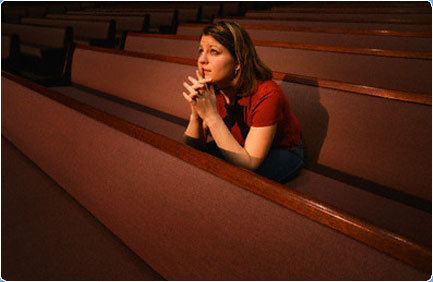
Read more…

Praying James 4:1-3

Beginning with the month of May, we began praying The Book of James on the Ranger Joe’s God and Country Show .

James 4:1-3

New American Standard Bible (NASB)

1 What is the source of quarrels and conflicts among you? Is not the source your pleasures that wage war in your members? You lust and do not have; so you commit murder. You are envious and cannot obtain; so you fight and quarrel. You do not have because you do not ask. You ask and do not receive, because you ask with wrong motives, so that you may spend it on your pleasures.


Today's Prayer

Lord, Your word convicts us of our motives. Forgive us Father, as a nation and as Your church for letting our “cravings” be our motive. Your word says we “...do not have because [we] do not ask…” and when we do pray, we “...ask with wrong motives…” Oh Lord, renew our hearts, renew our motives, in Your Son’s name we pray, amen.


By: TwitterButtons.com

Read more…

From January to April we prayed Psalm 119 on the
 Ranger Joe’s God and Country Show .

To see ALL of the Psalm 119 prayers,
 click here

DailyPrayers-Vol1-2012-Cover120wide.png

These prayers have now been turned into a book which you can purchase by clicking here. In addition to the Psalm 119 prayers there are two appendices with others prayers also (25 Days of Prayer During the Christmas Season and Praying in the New Year).

Each stanza has a Key Word, Emphasis and Application which succeeding prayers are built around. We are currently praying the key word for each stanza.


Psalm 119:169-176

Key Word                Praise

Today’s Prayer

Father, we, as a nation and as Your church have wandered away from You, like lost sheep. Find us, seek us Lord (Psalm 119:176) and cause us to praise You, cause praise to flow from our lips, and let it be because of Your word (Psalm 119:173). Father, we have turned aside from You and have become corrupt (Psalm 14:3). Oh Lord forgive us. Lord, we know that not a single one of us is righteous before You (Romans 3:10). By Your Spirit Lord, cause us to have a renewed hope in You (Romans 8:9)


By: TwitterButtons.com

Read more…

Recently a friend asked me, “What is the most important lesson you hope to teach your grandchildren?” After thinking about this question, I thought I would like to share one of the lessons I hope my grandchildren will learn from my husband and me.

As my grandchildren walk through their journey of life, they are going to face many challenges and disappointments. God will allow challenging situations in their lives for a purpose—to develop character and spiritual growth. The trials and challenges are inevitable, they must learn to expect them, acknowledge them, and learn from them.

The challenges they face are not meant to destroy them, but designed to make them capable to fulfill their God-given assignments. Their trials and challenges create an environment where they will see the true nature of their dependency on God. It is through their problems, failures, weaknesses, and neediness they will learn to rely on God. Their challenges, trials, and disappointments can be blessings in disguise.

 As grandparents, we can model for our grandchildren from our experience that “Life is hard but God is good.” We have a wonderful intercessor sitting at the right hand of the Father, waiting for us to call on him. We can come to Him with boldness and confidence at any time. When we call him, He will never put us on hold, His line is never busy, and we do not have to press a number for our language; or leave a voice mail, He is always available. In I Peter 5:7 we read, “Give all your worries and cares to God, for he cares about what happens to you.”

 According to Paul in Philippians 4:6-7 my grandchildren will only find fulfillment if they don’t get anxious or worry about anything, but pray about everything, telling God about their needs and thank Him for all He has done for them. Then they will experience God’s peace, which exceeds anything they can understand. His peace will guard their hearts and minds as they live in Christ Jesus.  

 I would like you to share a lesson you would like to teach your grandchildren in the comment section or send me an email at info@grandparentingwithapurpose.com. If you have enjoyed this blog, share it with your friends.

Remember a beautiful rose has thorns.

© Lillian Penner 2012


Read more…

Listening to God for Others

I visited a friend’s church this past weekend and was blessed. Literally. What I mean is, my friend wanted me to meet her pastor and his wife, so she introduced me after the service. After the usual exchange of greetings, Pastor Mike asked if he, Cindy his wife, and my friend could bless me. Well, I’m never one to pass up an opportunity to be blessed, so of course I said yes.

The three of them laid hands on me then Mike began. “Lord, we’d like to bless Cynthia today. Is there anything You want to say to her through us?” They waited silently. After a minute or two, Cindy spoke. She had had seen a picture of me tending my garden. I was looking carefully to see if any of the seeds I’d planted were growing. God wanted me to know, she said, that they were indeed growing. That they would bloom, multiply, and bear lots of fruit. She also shared a scripture that the Holy Spirit had brought to mind.

Then Pastor Mike spoke. He had seen a different picture, but it had a similar meaning: The things I have been praying and working for are happening—even if I cannot see them yet. He said the enemy wanted to discourage me so I’d give up, but I must hang onto hope.

Finally, my friend spoke. While Cindy had been speaking, she had heard from the Lord that the seeds I’d planted in one specific situation—one very near to my heart for which I’ve been praying for years—were growing and would bear fruit.

Well, I probably don’t need to say how much these encouraging words bolstered my hope. Each picture, verse, and word resonated with me—these were all things the Lord had been saying to me already. But what wonderful confirmation to hear them from people I didn’t even know!

But wait, it gets better. That afternoon I got as surprise phone call. Casually, the caller told me something my heart has been waiting to hear for years. What he shared showed me that my friend had heard right—the situation so near to my heart that I’ve been praying about for so long—God is working! Big time! I think I smiled for hours after hanging up.

I have to admit that even though I’m a huge proponent of listening prayer, I don’t often use it to bless others. But after being on the receiving end of such powerful ministry, I think I’d like to change that! How about the rest of you? Do you listen to God and bless others with what He shares? I’d love to hear about it!


Read more…
40 Days of Prayer

Issued the America's National Prayer Committee ... and many other prayer leaders and ministries

The United States is clearly a nation in trouble. A battered economy, political divisiveness, the culture wars, racial uneasiness, and a sidelined church, provide the dry tinder for an inflammatory national election in November of 2012. Many stake their hopes or fears on the outcome.

While believing in and encouraging the importance of exercising our right to vote, we also call the Christian Church in America to do that which is even more critical in these days...to pray! The seriousness of our day requires an intensity of prayer that is unprecedented. Accordingly, we call for 40 days and nights of unrelenting intercession on behalf of our nation, immediately preceding the Nov.6th election.

Our focus in prayer is simple. We are praying for:
  1. Revival in the Church-that another Great Awakening would sweep across America as the Lord’s people humble themselves in repentance and prayer. (2 Chronicles 7:14)
  2. A standard of righteousness to be raised over this nation.(Proverbs 14:34)
  3. The elections- that God would intervene. This is not a partisan or political effort but a plea to bring God into a process that desperately needs His wisdom and direction. (Isaiah 48:17)
This is a call, not from one ministry or organization, but from diverse leaders from across the spectrum of the U.S. Church. It is also not a call to a particular event. It is a pleading for all Christians to do something proactive and powerful in prayer for the 40 days leading up to our fall elections.

As leaders in the Body of Christ, we commit ourselves to prayer during these days of decision regarding the future of our nation. Even more, we commit ourselves to mobilize prayer in our spheres of influence, that every part of the Lord’s Church would join together in day and night prayer for the intervention of God on the part of our nation.
Read more…
It Seems to Me . . . PDF Print E-mail

. . . we need preparation when we plan to pray for others on the spot.


A colleague recently told me they were planning a Prayer Station on a college campus. This is the season when many churches have prayer booths at county fairs and community celebrations. It occurred to me that even the most seasoned intercessor needs some preparation before they invite people to come to them for prayer.

Here are a few questions they would do well to anticipate from those stopping at their table/booth:

Q. "Why are you doing this?"

We believe in the reality of prayer ... we believe our Creator is relational and wants us to present our need to him ... we have experienced benefits from praying ...

...If you allowed us to pray for you, what would you most want us to pray about?

Q. "Who are you praying to?"
We are Christ followers . . . we pray to the one who created all life and matter. We pray in the name and authority of Christ; God's one-of-a-kind messenger/savior. Jesus spoke to our Father in heaven daily and in times of great trouble or anguish. Would you permit us to pray to Jesus on your behalf? What need/request comes to your mind?

Q. "I don't believe in God, what difference would it make?"
Our purpose in praying is for you to be blessed with faith in all that is real, filled with hope for all that can take place in your life and for love to transform you or any need or situation you face. Everyone needs a boost of faith, hope or love.

Could we briefly pray for more faith or hope or love in your life?

If they answer no to that question: Where do you find faith, hope and love? What is the source for that hope?

Q. "I've tried prayer; it does not work."
We actually agree. Prayer is not magic nor is it a method that requires God to give us exactly what we ask for. Prayer is a word that describes an ongoing relationship, which includes communication--talking and listening. When we ask God for something specific (help, healing, hope, heaven, salvation) we remember that God is not a vending machine. Our Father in heaven has the knowledge, wisdom, and resources he knows we best need and in his love responds, though often in ways unexpected.

May we come to God on your behalf simply asking for his best action in your need/life?

Q. If the person requesting prayer begins to share a long, life story, one suited for counseling session but not a Prayer Station setting:


Forgive my interruption (to the person about to tell you their life story). Less is more when it comes to this type of prayer. The less information you give me, the more I am able to listen to God's Spirit about how to pray. What is your _________ (deepest hurt or most pressing need or most confusing concern)?

It seems to me the more we equip pray-ers in the details of the situation (who, what, where, when, why) the more they will be able to get to the how ("Holy Spirit, how do I pray for this person?") part. Preparation and coordination among the members integrates simple human encounters with a spiritual dynamic as they invite the presence of the Spirit, a revelation of Christ as the way, the truth, the life, and anticipate a faith-response to our heavenly Father.

Pastor Phil

Originally posted onChurch Prayer Leaders Network

Read more…

Religious Liberty Prayer Bulletin | RLPB 164 | Wed 20 Jun 2012


BURMA & SUDAN: WARFARE AGAINST CHRISTIANS 

by Elizabeth Kendal

Earlier this month two horrendous wars marked one year since the breakout of hostilities. The Islamist Arab-supremacist regime in Khartoum, Sudan, began its genocidal campaign against the predominantly Christian Africans of the Nuba Mountain, South Kordofan, on 5 June 2011. The Buddhist Burman-supremacist regime in Naypyidaw, Burma (Myanmar), launched its military campaign against the Christian Kachin of Kachin State in northern Burma on 9 June 2011. In fact these are only the most recent episodes in two long histories of military brutality, ethnic cleansing and even attempted genocide. Despite the enormity of the human suffering, the 'international community' and the mainstream media are largely uninterested, for these conflicts - one a declared Islamic jihad, the other a blight on the Burmese fairytale - are just too hot to handle, too politically incorrect to touch. Furthermore their poor Christian victims are actually an inconvenience to those who make decisions based on economic and geo-strategic interests, as distinct from righteousness and justice. These 'inconvenient' Christians - victims of greed and racial-religious hatred - need our prayers.

BURMA (Myanmar): ETHNIC CLEANSING OF THE KACHIN

UN figures put the total number of Internally Displaced People (IDPs) in Kachin State at over 62,000 with some 24,000 in camps in government-controlled areas. Another estimated 40,000 are in areas controlled by the Kachin Independence Army (KIA) where government blockades ensure that humanitarian aid (including food and medical supplies) is scarce. The KIA puts the number of IDPs at closer to 100,000. Well over 7,000 refugees have fled across the border into China. Medics fear that without mosquito nets the rainy season will herald an explosion of malaria cases. Further to this, a Human Rights Watch consultant and Burma specialist, Matthew Smith, warns that 'the IDP camps are essentially pools of prey for human traffickers'. Military violence has left some of the IDPs severely traumatised (e.g. speechless, incontinent). Churches throughout the state who are providing for and sheltering hundreds of IDPs each are struggling greatly, especially as Burmese soldiers routinely intimidate pastors and attack churches. The Kachin are a Christian people with a distinctly Christian culture and Burma's Buddhist Burman-supremacist regime wants to exploit their resource-rich ancestral lands.

SUDAN: GENOCIDE OF THE NUBA

Hundreds of thousands of displaced predominantly Christian Africans in South Kordofan are facing a slow and agonising death by starvation due to famine engineered with genocidal intent by the National Islamic Front / National Congress Party regime in Khartoum. The Nuba are a predominantly Christian African people and the Islamist Arab-supremacist regime in Khartoum is in the process of annihilating them so it can control their resource-rich ancestral lands. In refugee camps in South Sudan, some of those who have survived the long trek from South Kordofan and neighbouring Blue Nile State have been dying from dehydration, diarrhoea and sheer exhaustion. The Jamam refugee camp in South Sudan's Upper Nile State holds some 20,000 refugees. An aid worker from Oxfam, Peter Struijf, told Associated Press (18 June) that children are already perishing and the camp will be out of water in a week. Whilst the impending rainy season will provide much needed water for refugees, it will exacerbate the plight of the estimated 40,000 IDPs still trekking south.

'For we do not wrestle against flesh and blood, but against the rulers,
against the authorities, against the cosmic powers over this present
darkness, against the spiritual forces of evil in the heavenly places.
Therefore, take up the whole armour of God . . . praying at all times in
the Spirit, with all prayer and supplication.' (Taken from Ephesians
6:12-18 ESV.)

PLEASE PRAY SPECIFICALLY THAT -

* Jehovah-Jireh (the Lord who provides) will provide Kachin and Sudanese refugees with all their needs; may the Holy Spirit strengthen their hearts, keeping faith and hope alive, so they will seek the Lord and experience his grace and power.

* Yahweh Sabaoth (the Lord of hosts / the commander of heaven's angelic armies) will intervene for his people to deliver vengeance to their enemies and recompense to the victims (Isaiah 35:4; also 40:10).

PRAYER: 'O LORD, you hear the desire of the afflicted; you will strengthen their heart; you will incline your ear to do justice to the fatherless and the oppressed, so that man who is of the earth may strike terror no more.' (Psalm 10:17,18 ESV.)

To view this RLPB with hyperlinks, visit the Religious Liberty Prayer Bulletin blog: http://rlprayerbulletin.blogspot.com


SUMMARY TO USE IN BULLETINS UNABLE TO RUN THE WHOLE ARTICLE

WARFARE AGAINST CHRISTIANS IN BURMA & SUDAN

A war of ethnic cleansing is being waged by Burma's Buddhist Burman-supremacist regime against the Christian Kachin of Kachin State in northern Burma. Up to100,000 Christian Kachin have been displaced, humanitarian aid is routinely blockaded, children are kidnapped and trafficked, and civilians are so brutalised by the military that some are severely traumatised. Meanwhile, genocide is being perpetrated by Sudan's Islamist Arab-supremacist regime against the predominantly Christian African populations of the 'new south' (Abyei, South Kordofan and Blue Nile). The National Islamic Front / National Congress Party regime in Khartoum has engineered a famine that could kill 500,000 in coming months. Whilst hundreds of thousands have escaped into refugee camps in South Sudan, weak and frail children, wounded and elderly are perishing from dehydration and sheer exhaustion. Please pray!

We suggest that churches and fellowships using the above Summary might also provide a copy of the listed prayer points to be used in their worship by people who are leading in prayer. 


NIGERIA: TERROR STRIKES AGAIN

On Sunday 17 June Islamic terrorists struck five churches in the central middle-belt state of Kaduna. Boko Haram has claimed responsibility. The Kaduna state government has imposed a 24-hour curfew. Two churches were bombed in the Muslim-dominated north of the state: the Evangelical Church of West Africa (ECWA) church in Wusasa, Zaria Local Government Area (LGA) and Christ the King Cathedral Catholic church in Sabon Gari LGA, just north of Zaria city. Three churches were bombed in Christian-dominated Kaduna South LGA: the Shalom Church in the Trikania, along with two churches in Nassarawa and Barnawa. Ethnic-Christian youths responded to the massive, multiple bombings at Shalom Church with rioting that claimed seven lives and left dozens wounded. The weekend's toll: at least 52 dead and more than 150 wounded. Please pray for the Church in Nigeria.

For more information, updates and helpful links see Elizabeth Kendal's blog 'Religious Liberty Monitoring'

http://elizabethkendal.blogspot.com

Previous RLPBs may be viewed at http://rlprayerbulletin.blogspot.com/

This RLPB was written for the Australian Evangelical Alliance Religious Liberty Commission (AEA RLC) by Elizabeth Kendal, an international religious liberty analyst and advocate, and a member of the AEA RLC team.

If this bulletin was forwarded to you, you may receive future weekly issues
direct by sending a blank email to join-rlpb@hub.xc.org

Read more…

iPhone Screeshots App

God: Images and Meditation

By NavPress

iPhone Screenshot 1
iPhone Screenshot 2
iPhone Screenshot 3

CONNECT with Jesus

Let’s face it, life is complex. School, work, family, relationships, finances, health issues, and past experiences. Some days we celebrate, and others are more than we can bear. The beautiful thing is that hope is possible. God is standing right beside us to offer mercy longing to draw us into his loving embrace. He desires to walk with us through this journey of life. 

To deepen any relationship, commitment and time is involved. And what’s beautiful about our relationship with God is that he’s available 24/7!

So where do we begin? Carving out time daily to experience God through reading and reflecting on His Word is a foundational holy habit; this truly characterizes people who walk deeply with God. Some simple steps into this relationship are:

  • Read and meditate on God’s Word each day
  • Confess in prayer how you really feel, but then thank God for who you are in Christ and His promises to you
  • Write down your feelings and insights from reflecting on His Word


Over the next year we invite you to absorb the images and verses, while being challenged by the questions. Review them out loud. Meditate on them. Pray over them. Tell a friend what they mean to you. Look forward to listening to God speak to you!


If you long to experience transformation, to trust and obey God, resist sin, listen to God’s voice. There is no better investment than meditating on the Word of God. “They are not just idle words for you—they are your life...” Deut. 32:47 (NIV)

Read more…

Giving God the Desires of HIS Heart

I often hear folks asking God for the things He promises—provision, peace, health, and safety, and the like. I do it myself, and why not?  I’m His child, and He is a good Father, so He gladly concerns Himself with the things that concern me. So if the issue on my heart is something I know that He does and wants to do, then I generally ask Him to do it.

But there is another side to praying according to God’s will: As much as God loves to take care of us, it’s not all about us. God intended prayer to be a two-way conversation. At its best, relationship with God is a mutual, reciprocal friendship. If I take time to listen, God confides His heart in me. He actually invites me to concern myself with what concerns Him. As I get to know God better and better, I care more and more about things He wants—the “His kingdom and righteousness” types of things (Matthew 6:33). Here are some Scripture promises that illustrate what I’m talking about.

“Those who are peacemakers will plant seeds of peace and reap a harvest of righteousness” (James 3:18).

And this one: “You will know that I am the LORD; those who hope in me will not be disappointed” (Isaiah 49:23).

Here’s another one: “God is not unjust; he will not forget your work and the love you have shown him as you have helped his people and continue to help them” (Hebrews 6:10).

Or here’s one I read this morning: “Seek the peace and prosperity of the city to which I have carried you into exile. Pray to the Lord for it, because if it prospers, you too will prosper” (Jeremiah 29:7).

God has shown me how these expressions of His heart apply to specific situations around me—at work, at church, in my relationships, and in my own deepening relationship with Him. These promises express His heart. As I start to pray and lean into His desires, I express love for Him and bring Him joy, just as when He answers my provision-safety-peace prayers, I feel loved and cared for. It’s all part of genuine friendship with God.

I know I haven’t even scratched the surface of promises that express God’s heart. I’d love to hear from you: What God-centered promises are a part of your conversations with God these days?

Read more…

In honor of Father's Day I would like to share a prayer written by a grandfather for his grandchildren.

A Grandfather’s Prayer

Dear Heavenly Father, Your Word proclaims that children

are a gift from God.

My children have blessed me with many grandchildren,

and I thank you for each one.

I pray that I will carry on your hope to our future generations.

My prayer for each grandchild is that they will experience

your fullness in their daily walk with You.

May they desire to live for You, guard their steps,

and draw near to You, experiencing your love for them.

In times of testing may their hearts and minds be drawn to you,

causing them to remember your Word,

 and give them a way to escape as you promise.

In addition, help them to honor you through the life

you’ve given to them.

Help me, as their grandfather to reflect a clear image of You

 through the life you have given to me.

I trust You to give me patience and love to influence,

 and encourage them into your grace.

I commit each one of my grandchildren into your care and blessing.

In Your precious name, I pray, Amen. 

Written by John Penner, Oregon, 2009

Read more…

9651006689?profile=original

Dear praying friends,
 
I invite you to pray, using a special prayer guide called 30 Days of Prayer for the Muslim World. This annual prayer guide calls Christians from all over the world to pray for Muslims during Ramadan, July 20 to August 18, 2012. Ramadan is the special month of fasting and praying in which Muslims pray in special ways according to Islamic tradition.  
 
Many of you have prayed using either of our prayer guides, Seek God for the City or Global Day of Prayer, so I’m sure this prayer guide is something you will want to consider.
 
This full-color prayer guide—available in both adult and children’s versions—is a proven tool to help Christians pray with informed wisdom and hope for Muslim neighbors across the street, and Muslims around the world. Each day focuses on a specific issue or area of the Islamic world. As you read through it and pray, you’ll gain a better understanding of Muslims and find your hope increase for God’s purpose among all peoples.
 
To see a few sample pages of the adult or children’s version, visit www.waymakers.org/30-days.html. WayMakers has made it easy to order from our website or by phone. The cost begins at $3 for a single copy ($3.50 for children’s) with discounts as great as 60% when ordered in quantity. Check out the details online at www.waymakers.org/30-days.html or call us at 512.419.7729.
 
Yours in hope,
 
Steve Hawthorne, Director
WayMakers

Read more…

Religious Liberty Prayer Bulletin | RLPB 163 | Wed 13 Jun 2012

EGYPT: PRESIDENTIAL ELECTION 16-17 JUNE (plus Nigeria) 

by Elizabeth Kendal

Egyptians are set to return to the polls over 16-17 June to elect their president. The two contenders - the Muslim Brotherhood's Mohamed Morsi and Mubarak's Prime Minister Ahmed Shafiq - are poles apart and 50 percent of voters did not vote for either of them in the preliminary polls. The youths who led the protests in Tahrir Square feel betrayed by the process. Rather than choose between political Islam and a secular police state - something one described as a choice 'between two wrongs' - they are organising a boycott.

On Thursday 14 June Egypt's Supreme Constitutional Court will be ruling on the constitutionality of the Political Isolation Law which the Islamist-dominated parliament passed in April. The law, which bans senior officials of Mubarak's regime from holding political posts, saw Shafiq disqualified from contesting the presidency. However, Shafiq won an appeal against the law which was then referred to the Constitutional Court. If on 14 June the court declares the law valid, then Shafiq will again be disqualified and fresh elections will be called. Whilst the 'revolutionary' forces are hoping for a cancellation that would give them time to re-organise for fresh elections, supporters of the Muslim Brotherhood (MB) want the elections to go ahead this weekend as they believe Morsi will have little trouble defeating Shafiq.

To seduce Christians, the MB signed an agreement with Egyptian evangelicals promising to advance religious freedom and equality. Christianity Today questioned whether the MB could be trusted after reneging on its promise not to field a candidate for the presidency. When MB representative Mahmoud Ghozlan responded to this, he said the Islamic prophet Muhammad justified reneging on promises when he said: 'If someone swears by his right hand, saying "by God this or that" but then sees something better, he may atone for his right hand and take that which is better.' Ghozlan said the MB promised not to field a candidate before the parliamentary elections showed just how keen the nation is for Islam. After gaining dominance over the parliament, the MB deemed it would be 'better' for democracy if Egypt had a MB president. If the MB win the presidency doubtless they could deem fundamentalist Islam and Sharia Law 'better' than a pact with evangelicals.

The elections could cause a profound fracturing of the state and trigger a spasm of political and sectarian violence. As noted in RLPB 161, Islamists and revolutionary forces have unfairly and unjustifiably attributed the surprise rise of Shafiq (who ran on a platform of stability and security) to a conspiracy by the Coptic Church. Egypt's indigenous Christian Copts could well find themselves being set up as a convenient scapegoat for national anger, no matter who wins. Please pray for God's faithful in Egypt.

[Check for updates on the election on Religious Liberty Monitoring http://elizabethkendal.blogspot.com.au/ where it will be followed closely.]

PLEASE PRAY SPECIFICALLY THAT GOD WILL -

* revive Egypt's churches and historically Christian peoples, so that lawlessness and threat will not hinder their preaching of the gospel, their commitment to prayer and their walk of faith: only through Christ shall Egypt be 'blessed' (Isaiah 19).

* awaken Egypt's Muslims to the fact that Islam is not the solution: though there be pain, may there be healing so that Egypt will 'return to the Lord' (Isaiah 19). [Egypt was overwhelmingly Christian before the Arab-Islamic conquests of the 7th Century.]

* give Coptic and other Christian leaders great spiritual discernment and wisdom to lead the Church in faithfulness and hope and according to the will of the Lord.

* be a shield and refuge to those who put their trust in him; may he protect their families and provide all their needs.


SUMMARY TO USE IN BULLETINS UNABLE TO RUN THE WHOLE ARTICLE

EGYPT: PRESIDENTIAL ELECTION 16-17 JUNE

Egypt's presidential election - to take place this weekend unless cancelled by the Constitutional Court - could readily fracture the state by triggering political and sectarian violence. To secure the evangelical vote, the Muslim Brotherhood (MB) - which has already broken its promise not to field a presidential candidate - has signed an agreement with Egyptian evangelicals promising to advance religious freedom and equality. Meanwhile they are blaming the Coptic Church for the rise of their opponent Ahmed Shafiq. However, the MB might adhere to its Islamic principles and renege on a pact with evangelicals if it secures the presidency. Also there is great concern that Egypt's indigenous Christian Copts will be made the scapegoat for national anger no matter who wins. Please pray for God's faithful in Egypt.


We suggest that churches and fellowships using the above Summary might also provide a copy of the listed prayer points to be used in their worship by people who are leading in prayer.


NIGERIA: TERROR STRIKES AGAIN

On Sunday 10 June a massive suicide car-bomb ripped through Christ's Chosen Assembly Church in Jos, in the central, middle-belt state of Plateau. The blast occurred around 11am during morning worship and was so powerful the church collapsed. Pastor Monday Uzoka, his wife and two children are amongst the wounded, with Uzoka and one of his elders in a critical condition. Meanwhile, gunmen opened fire inside and around the EYN church in Biu, in the north-eastern state of Borno. [EYN stands for 'Church of the Brethren in Nigeria' in the local Hausa (Muslim) language.] The weekend's toll was at least six believers dead and 52 hospitalised, with many still missing. Boko Haram has claimed responsibility for both attacks and vowed to continue attacking state institutions and churches 'until we achieve our goal of establishing an Islamic state in place of the secular state'.

REMINDER: The National President of the Christian Association of Nigeria, Pastor Ayo Oritsejafor, has declared Saturday 16 June a day of national prayer and fasting for the country. Please continue in prayer for the Church in Nigeria.


To view this RLPB with hyperlinks, visit the Religious Liberty Prayer Bulletin blog http://rlprayerbulletin.blogspot.com

For more information, updates and helpful links see Elizabeth Kendal's blog 'Religious Liberty Monitoring'

http://elizabethkendal.blogspot.com

Previous RLPBs may be viewed at http://rlprayerbulletin.blogspot.com/

This RLPB was written for the Australian Evangelical Alliance Religious Liberty Commission (AEA RLC) by Elizabeth Kendal, an international religious liberty analyst and advocate, and a member of the AEA RLC team.

If this bulletin was forwarded to you, you may receive future weekly issues direct by sending a blank email to

join-rlpb@hub.xc.org

Read more…

Has Christian Publishing Lost Its Way?


As an admirer of Michael Hyatt, I greeted the release of his best-selling Platform book with great anticipation. But having read the book, I find myself disappointed at its underlying message and deeply concerned about the overall condition of the Christian publishing industry.


There’s no doubt that Hyatt offers many truths about the difficulty of getting our message heard in a noisy world. And he highlights a dazzling array of useful technological tools for breaking through the fog and gaining a higher platform.


As a preacher and writer, these are issues of great interest to me. I want to get my message disseminated to a wider audience and am eager to learn from experts like Michael Hyatt. Yet I’ve been frustrated by Christian publishers’ increasing reliance on “platform” as the primary criterion for evaluating a book proposal. I sometimes wonder if Matthew, Mark, Luke or John could have gotten their book published today. And as the former CEO of Thomas Nelson, Michael Hyatt is one of the industry leaders responsible for this trend.


I can’t help wondering if much of this is akin to the story in Genesis 11, where some enterprising people sought a higher platform in order to make a name for themselves. Their concern wasn’t to further God’s kingdom but to advance their own.


From my perspective, Michael Hyatt’s book is largely amoral when it comes to the purpose of the platform. Yes, he talks about creating “wow” through great products we can promote via our platform. But communicating God’s truth is a lot different than just creating products of our own hands—products that may turn out to be like the bricks created in Genesis 11. The only true and lasting wow occurs when an endeavor is marked by God’s supernatural touch.


iPhones are an excellent product, and Steve Jobs definitely was gifted at promoting the “wow.” Yet iPhones aren’t inherently virtuous. They can be used either for good or for evil, and the same can be said of a platform. Building a platform can be pointless, or even evil, if our purpose is not God’s purpose.


How would Jesus handle technology if He lived in the 21st century? Would He boast that he had a billion Facebook friends or Twitter followers—or would He purposely “unfriend” people or delete Twitter followers who were followers in name only?


The bottom line is this: Michael Hyatt’s book is unwittingly promoting the Cult of the Celebrity. Before you can get your Christian book published these days, you first must make yourself a celebrity. If you have as many Twitter followers as Justin Bieber or Lady Gaga, your chances are pretty good—regardless of the book’s message.


I dove into the world of Twitter only recently. It was a landmark day when I had the same number of Twitter followers as the number of people in my church when I was a pastor. But although I was excited that my numbers kept growing, I was troubled that only a small portion of my so-called followers even knew who I was. And many were clearly following merely out of self-interest, hoping I would follow them back and increase their numbers.


In Platform, Michael Hyatt makes many references to his use of analytics to evaluate the responses he gets to his blogs and tweets. While I have no problem with analyzing results, I’m grieved that this is what much of the Christian church world and publishing world have become: It’s all about the numbers, baby. While I’m sure God LOVES numbers when they represent transformed lives, numbers on Facebook or Twitter are usually pretty shallow, aren’t they?


In stark contrast, Jesus changed the entire world with a core group of 12 rather dysfunctional men, none of whom started with much of a platform. Yes, He fed thousands at times, but His hope was never that the crowds would change the world. He put His focus on disciples.


And Jesus never told His disciples to seek a higher platform. To the contrary, He told them to kneel down and get low enough to wash each other’s feet (John 13:14-15). He taught that we should humble ourselves and seek out the lowest place at the banqueting table (Luke 14:7-11, 20:46).


Some of the elements in Platform seem quite elitist. Not everyone can afford to get a new headshot taken by a professional photographer every few years, as he recommends. Few people have the resources to follow his advice and get an image consultant and voice coach. (Can you imagine Jesus getting help from an image consultant or voice coach? What a conversation that would be!)


Not everyone is as technologically astute as Hyatt, and here again, this comes across as elitist. Yes, some of us do still have AOL e-mail addresses, which he says is a turnoff to the publishing gatekeepers who long ago upgraded to the 21st century. Instead, we should all have our very own Internet domain, promoting our own name and branding.


Indeed, that seems to be the chief objective advocated in Platform: to promote our own name and branding. At best, this objective is extremely shallow. At the worst, it violates a key precept of Scripture: “Not unto us, O Lord, not unto us, but to Your name give glory” (Psalm 115:1).


From a practical perspective, Hyatt is probably right about his suggestions. This is how the Christian publishing world works, a world he has been instrumental in creating. But where is Jesus in this Cult of Celebrity? I’m sincerely trying to figure that out.


Jim Buchan

Charlotte, NC


Read more…